Why intensity matters way more than most people realize
Here's the thing nobody tells you: more intensity is not automatically better. I see this mistake constantly. Someone grabs a lemon clitoral vibrator, goes straight to the highest setting, and then assumes it's "not for them" when that turns out to feel overwhelming or even numb them out.
The truth is that intensity is a dial, not a finish line. And finding the right setting for your body is an actual skill worth learning.
The science of why your body responds differently to different speeds
Your clitoris has about 8,000 nerve endings packed into a tiny space. That's not poetic. That's a lot of sensory real estate. When you change the intensity of stimulation, you're changing which nerves are firing and at what frequency.
Lower speeds (usually patterns 1-3 on a lemon sucker or similar clitoral vibrator) activate surface nerves. They feel subtle, concentrated, and they let you feel texture changes and nuance. Higher speeds activate deeper nerve bundles and create a broader, more diffuse sensation. Neither is better. They're just different.
This matters because your nervous system is also a dial. Some days, after work or stress, your nervous system is amped up. Going to high intensity immediately can feel like too much sensory input. Other days, when you're really relaxed and aroused, you might want that intensity to actually feel something.
Seasonally, this shifts too. Many people find they prefer lower intensities during higher-stress parts of their cycle and higher speeds when they're more relaxed.
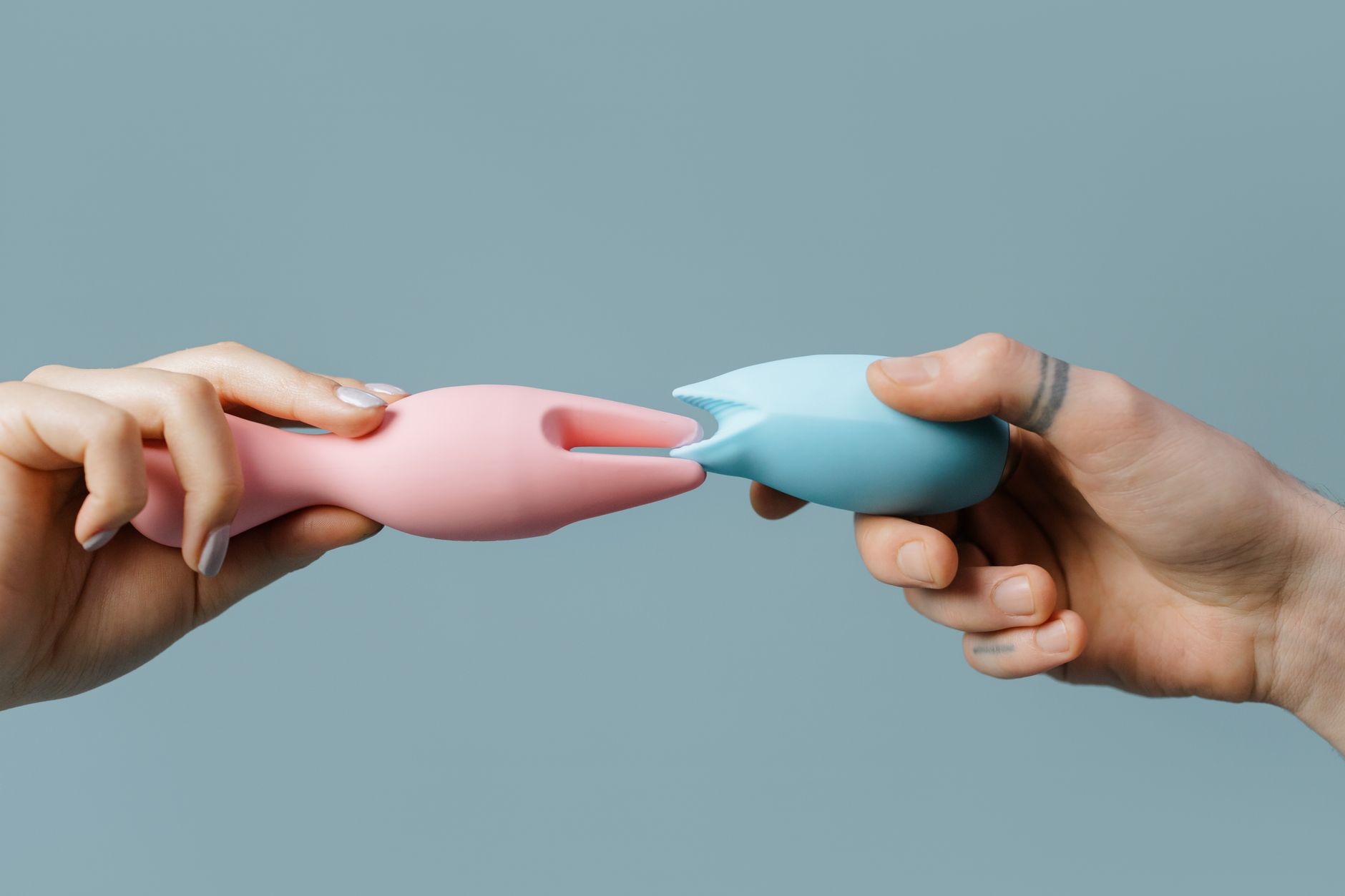
Photo by cottonbro studio on Pexels
How to actually find your starting point
Forget what you think you should like. Here's the process I recommend to anyone using a new lemon clitoral vibrator.
Start at pattern 1 or 2 (the lowest setting). Yes, even if you've used toys before. You're learning what this particular toy feels like on your body. Hold it at a 45-degree angle against your clitoris for 10-15 seconds. Notice what you're actually feeling. Is it buzzy or rumbly? Does it feel good, neutral, or uncomfortable?
Then move to pattern 3. Wait 10 seconds. Notice the difference.
Keep moving up one pattern at a time. The goal is not to find orgasm. The goal is to find the intensity where you feel the most sensation without any numbness or overstimulation. This usually happens somewhere in the middle of the range, not at the top.
Write it down if it helps. Seriously. "Pattern 4 feels like the sweet spot when I'm post-coffee and already warmed up." That kind of note becomes really useful over time.
The intensity dial changes with arousal level
One of the most common mistakes I see is people assuming they have a fixed preference. You don't. Your preference changes based on how aroused you are.
If you're just starting to explore, low intensity (patterns 1-3) is almost always better. Your nervous system hasn't fully ramped up yet, so less stimulation actually does more. It lets you feel the buildup.
Once you're aroused, you can often handle much higher intensity without it feeling overwhelming. This is not weakness or numbness. This is normal physiology. As arousal increases, sensory thresholds shift. You need more input to feel the same sensation.
The mistake happens when people reverse this. They start at high intensity, numb themselves out before arousal has a chance to build, and then blame the toy. Lemon vibrators work beautifully. You just need to work with your arousal, not against it.
Intensity changes throughout your cycle
Hormones matter. A lot. If you menstruate, you've probably noticed that everything feels different depending on where you are in your cycle. That includes what intensity feels right.
Right before and during your period, when estrogen is lower and sensitivity might feel muted, higher intensities often feel better. Mid-cycle, when estrogen peaks and everything feels more responsive, lower intensities might actually feel like too much.
This isn't a bug. It's information. Track what feels good when, and you'll start to see your own pattern. For how to use lemon vibrators when sensitivity changes throughout your cycle, there's a lot more nuance to explore, but the basic idea holds: your body changes, and so does what feels good.
The difference between intensity and pattern
A lot of lemon vibrators have both. Intensity is the speed. Pattern is the rhythm. They're different tools.
Low intensity with a pulse pattern (on, off, on, off) can sometimes feel more interesting than high intensity steady. Or vice versa. Don't assume you know what you want until you've tried a few combinations.
Spend time with this. Try pattern 1 at high intensity. Then try pattern 3 at low intensity. Feel the difference. Your nervous system learns fast, and once you know what you actually like, you can get to it much quicker next time.
When you're getting numb, you're almost always going too high
If you're using a lemon clitoral vibrator and it starts to feel like nothing, or like a dull buzz, you're too high. This is not a sign that you need an even more intense toy. This is a sign that your nerve endings have adapted to the current input.
Drop the intensity by 2-3 settings and wait 30 seconds. Let your nervous system reset. Then go back up more slowly. You'll usually find a sweeter spot.
This is why slower, lower intensity can sometimes lead to better orgasms. You're not numbing yourself out. You're giving your body time to actually feel the sensations.
Intensity and pain are not the same thing
Here's a distinction that matters: intensity should feel strong or intense in a good way. Pleasure under pressure. If it feels sharp or pinchy, you've got a positioning problem, not an intensity problem.
Move the toy slightly. Angle it differently. Sometimes the issue is that you're vibrating directly against bone or tissue that doesn't like that particular frequency. If direct clitoral stimulation feels uncomfortable, intensity settings won't fix that. Positioning and pattern will.
Building your intensity routine
Once you know your baseline ("I like pattern 3 at medium intensity as my starting point"), you can build from there.
Some people like to start at their comfortable baseline and then gradually increase over 5-10 minutes. Others like to stay at one intensity for the whole experience. Some people use lower intensity for solo exploration and higher intensity with a partner because they feel different sensations or have different arousal levels.
None of these are wrong. The point is that intensity is a tool you control, not something that controls you. A lemon sucker is only useful if you know how to use it. And that starts with understanding what each intensity setting actually does for your body.
Your intensity preference is not fixed
Last thing: you're allowed to change your mind. What felt perfect last month might not feel right this month. You might discover that you actually prefer lower intensities than you thought, or that you want higher intensities for specific situations.
Toys aren't breakup material. They're tools that evolve with what you need. So do your preferences. Check in with yourself regularly. Notice what's changing. That curiosity is how you actually get good at pleasure.
People also ask
What intensity setting is best for beginners with lemon vibrators?
Start at patterns 1 or 2 (the lowest settings). Spend time feeling each level before moving up. Most beginners find their comfortable zone in the middle range (patterns 3-5), not at the top. The goal is to find where you feel sensation without numbness. Speed up once you're already aroused, not before.
Can lemon vibrators numb you out if the intensity is too high?
Yes. If you use the highest intensity for a long time, your nerve endings adapt and the sensation flattens. This is not permanent, and it doesn't mean the toy is broken. It means you went too high too fast. Drop the intensity by 2-3 settings, wait 30 seconds for your nervous system to reset, and you'll usually feel sensation again. Start lower next time.
Does a lemon clitoral vibrator feel stronger than other vibrators?
Lemon vibrators use suction technology, which feels very different from traditional vibration. They tend to feel broader, less directly intense on nerve endings, and more spread across tissue. Some people find this less intense than a high-speed traditional vibrator; others find it more pleasurable because it doesn't numb. It's not stronger or weaker, just a different sensation. Your intensity preference might be completely different with a lemon sucker than with other clitoral vibrators.
How do hormones affect what intensity I prefer?
Estrogen influences sensory sensitivity. When estrogen is lower (before and during your period), you often need higher intensity to feel the same sensation. When estrogen peaks (mid-cycle), lower intensities might feel like plenty. If you menstruate, track what feels good at different cycle times. You'll usually notice a clear pattern in your intensity preferences.
Should I always use the highest intensity setting?
No. Higher intensity is not the goal. The goal is sensation and pleasure. Many people get their best orgasms at medium intensity because it lets them build arousal gradually without numbing out. Start low, increase gradually, and notice where you feel the most. That's your intensity sweet spot, not the highest number your toy can go.
How long does it take to find your ideal intensity setting?
Most people figure it out in 2-4 uses. That's why the first time using a new lemon vibrator should be low-pressure exploration, not performance. Give yourself permission to spend 10-15 minutes just feeling different intensities without expecting orgasm. Once you know your body's response, you'll be able to dial in much faster.