
Let's talk about what trauma does to pleasure
Trauma disconnects you. Not morally, not permanently. But neurologically, it teaches your nervous system that your body isn't safe. Arousal requires a baseline of safety your brain isn't offering right now. So sensation flatlines. Touch that used to feel good feels like nothing, or worse, it feels triggering. You're not broken. Your nervous system is doing exactly what it was designed to do.
The numb feeling makes total sense. It also makes pleasure seem impossible. But numbness isn't a life sentence.
Why arousal disappears after trauma
Trauma lives in your nervous system before it lives anywhere else. Your amygdala (the threat-detection part of your brain) gets hyperactive. Your prefrontal cortex (the part that reasons, that says "I'm safe now") gets quieter. Arousal requires the opposite setup. It requires you to feel present, relaxed, and like your body is yours.
This is why you can't think your way out of numbness. Willpower doesn't work. Feeling guilty doesn't help. Your body is protecting you the only way it knows how.
The good news: your nervous system can learn new patterns. It takes time. It's not linear. But it's real.
Why lemon vibrators are different for this kind of reconnection
Most vibrators use percussion or buzzing. They demand a lot from your nervous system right away. Lemon clitoral vibrators use air-pulse suction instead. The sensation is gentler, more diffuse, less "on" your body and more like a soft, consistent presence around the area.
For someone rebuilding arousal after trauma, this matters. You're not fighting through intensity. You're learning that sensation can be subtle, safe, and restorative all at once. The suction pattern also works well for people whose nervous systems need predictability. There's no randomness, no sudden spikes. Just steady, rhythmic contact.
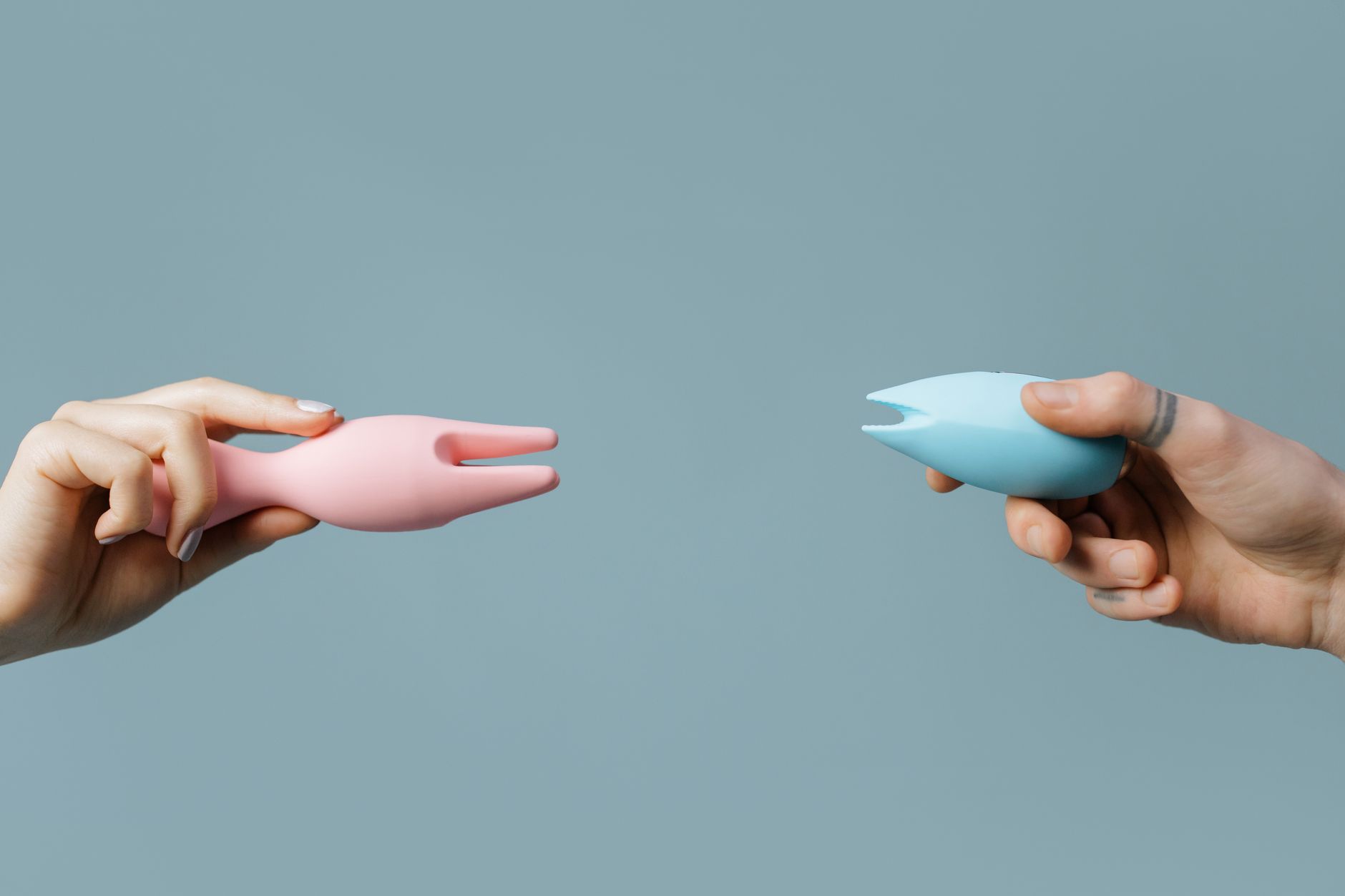
Photo by cottonbro studio on Pexels
Starting small: the first few sessions
Your first few times, forget orgasm. Seriously. That's not the goal. The goal is sensation without pressure. Here's what I recommend.
Set aside 15 minutes when you're alone and you know you won't be interrupted. No partners, no audience, no expectations. Put your phone on silent. If you need background sound (music, a podcast at low volume), add it. Your nervous system needs permission to relax.
Wash the lemon vibrator with warm water and soap. Dry it. Touch it with your hands for a minute. Get used to the weight, the shape, the material. This sounds basic, but introducing something new to your body after trauma requires your brain to register "this is an object, not a threat."
Start with the vibrator off. Yes, really. Trace it along your inner thigh, your hip bone, places that aren't the clitoris. Spend 5 minutes doing this. You're teaching your body that touch can be gentle and non-invasive. That you're in control. That you can stop whenever you want.
After 5 minutes, turn the lemon vibrator on its lowest setting. If there's a pattern button, choose the most basic, consistent pattern (usually setting 1). Place it loosely near the clitoris without pressing into it. Not on it. Near it. You're looking for sensation without intensity.
Stay there for 3-5 minutes. If it feels good, keep going. If it feels numb, that's information, not failure. Numbness sometimes needs time. If it feels triggering or wrong, stop. Turn it off. You're not doing anything wrong.
Building a rhythm that works for your nervous system
Once you're comfortable with the lowest setting for 5 minutes, the next step is patience, not more pressure. Repeat this session 3-4 times before you change anything.
Your nervous system heals through repetition and consistency. Doing the same thing, in the same way, at the same time of day, teaches your brain "this is safe." Then, after your brain believes it's safe, sensation often follows. Not always, and not on your timeline. But often.
After a week or two of the same session, you might notice:
A slight warming or tingling where you previously felt nothing. Arousal building slower than before, but actually building. The urge to move the vibrator, or to press slightly. Your body asking for more input. That's the signal to try setting 2. Same location, just a bit more intensity.
Don't skip steps. The urge to rush is real. But rushing teaches your nervous system that your pleasure matters less than speed. Pacing teaches the opposite.
What happens when sensation starts returning
Sensation often returns in patches. You might notice the left side of your clitoris wakes up before the right. You might feel arousal building in your inner thighs first, then moving inward. You might notice you're more sensitive at certain times of day, or on certain days of your cycle.
All of this is normal. Trauma scrambles sensation. Healing unscrambles it unevenly. Trust the pattern.
Once you're feeling something consistent, you can start experimenting. Try the vibrator with water-based lubricant (even though lemon vibrators work well without it, lube can make sensation feel less intense if intensity is still triggering). Try lying in different positions. Try focusing on your breath while you use it. Try switching between patterns more slowly, giving yourself time to adjust.
The key is agency. You're choosing. You're changing. You're testing what your body responds to.
Bringing a partner in, if you want to
Some people rebuild arousal solo first, then share with a partner. Some want their partner involved from the start. Both are valid. But if you're considering involving a partner, here's what matters.
Tell them in advance. Not during. Not as a surprise. Use simple language: "I'm working on reconnecting with my body after trauma. I'm using a tool that helps me. I might want you in the room while I do this, or I might not. I'll let you know." Their job is to be present without touching, without commenting, without making it about them.
If they can't do that, this isn't the time to involve them. Rebuilding arousal requires the deepest safety. If your partner makes it about their feelings, or your "progress," or their desire to see you come, your nervous system registers that as a threat. It shuts down harder.
If they can hold space (literally sitting across the room, present but quiet, respecting your autonomy), that's healing too.
When numbness lingers longer than expected
If after 3-4 weeks of consistent sessions, you're still feeling nothing, that's not failure. Sometimes trauma lives deeper. Sometimes you need professional support to move through it. A trauma-informed therapist, especially one who understands somatic (body-based) therapy, can help rewire your nervous system faster than pleasure tools alone.
You're not broken if this takes time. You're not broken if you need help.
The difference between numbness and a lack of interest
One more thing: numbness and disinterest are different. Numbness is "I feel nothing." Disinterest is "I don't want this right now." If you find yourself not wanting to use the lemon vibrator, that's also okay. Forcing pleasure never works. But notice the difference. If it's numbness you're working through, consistency helps. If it's disinterest, it might be that your system needs rest, or that you need a different approach, or that right now just isn't the time.
Honor both.
People also ask
How long does it usually take to feel sensation again after trauma?
There's no standard timeline. For some people, subtle sensation returns in a few weeks of gentle, consistent work. For others, it takes months, especially if the trauma is recent or severe. Nervous system healing doesn't follow a schedule. What matters is consistency and patience with yourself, not speed. Working with a trauma-informed therapist can significantly shorten this timeline.
Can lemon vibrators trigger me if I'm dealing with trauma?
It's possible. The suction sensation is generally gentler than other vibrators, which helps. But every body and every trauma history is unique. Start with the vibrator off, spend time touching it with your hands, and honor what your nervous system tells you. If it feels wrong, stop. Triggering yourself isn't part of healing.
Should I use lubricant with a lemon clitoral vibrator when rebuilding sensation?
You don't need to, but some people find water-based lubricant helpful because it reduces the intensity slightly, which can feel less jarring to a nervous system that's healing. Try both ways and see what your body prefers. If you do use lubricant, always use water-based to protect the silicone material.
What if my partner doesn't understand why I need to do this solo first?
That's worth a conversation outside the bedroom. Explain that rebuilding arousal after trauma requires your brain to feel safe, and that safety right now means being alone. If your partner can't accept that, they're not ready to support your healing. A good partner respects your autonomy, even when they don't fully understand it. If this becomes a pattern of them not respecting your boundaries, that might be a sign to talk to a couples therapist.
Is it normal to cry while using a lemon vibrator if you're healing from trauma?
Completely normal. As your nervous system relaxes and sensation returns, emotions often come with it. Your body was holding that tension. Sometimes pleasure and grief come out of the same door. If you cry, let it happen. Don't stop. You're not doing anything wrong.
How do I know if I'm ready to try more intense sensations?
Your body will tell you. You'll start wanting to move the vibrator, press it differently, try a higher setting. You'll feel genuine arousal building, not just sensation. When your nervous system feels ready, it usually asks for more. The key is waiting for the ask, not imposing it yourself.
What comes next
Healing isn't linear. Some days sensation feels present. Some days it disappears again. That's not backsliding. That's your nervous system still learning that it's safe. Keep showing up. Keep being patient with yourself. Keep choosing your own pleasure, on your own timeline.
Reconnecting with sensation after trauma is one of the most grounding, reclaiming things you can do. It says: my body is mine. My pleasure matters. I'm worth the time this takes. That's not a small thing. That's everything.
If you're stuck, if the numbness isn't budging, or if you need support navigating this with a partner, reach out. There's no shame in asking for help.