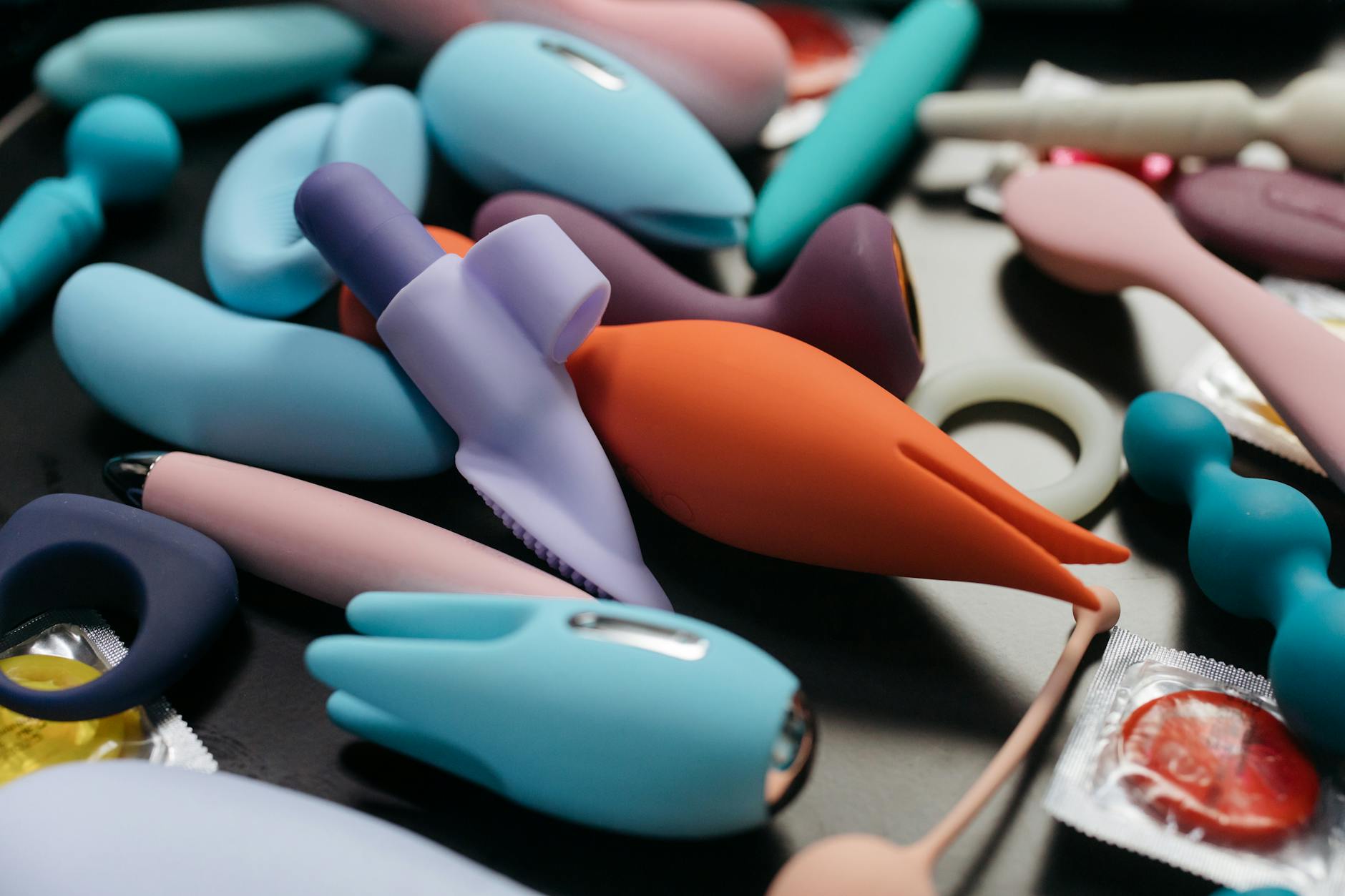
Here's what no one tells you about desire and life upheaval
You move to a new city. Your partner gets promoted and works 60-hour weeks. Your parent gets sick. You grieve a friend. You change jobs, switch careers, navigate a health diagnosis. And somewhere in all of that, sex stops mattering. Not because you stopped loving your partner. Not because your body broke. But because your brain is stuck in triage mode, and pleasure feels impossible when you're running on fumes.
This happens to almost everyone at some point. It's not a relationship problem. It's a nervous system problem.
Why life transitions hijack desire
Desire lives in a part of your brain that only activates when you feel safe, grounded, and present. When you're in survival mode—whether that's literal financial stress or the psychological fog of major change—that part of your brain goes offline. Your system is too busy managing logistics, processing emotion, and staying afloat.
This is neurologically real, not a character flaw. Your amygdala (the threat-detection center) gets louder while your prefrontal cortex (the pleasure and connection center) gets quieter. You can't think your way out of it. You can't will desire back into existence. And you definitely can't fix it with candlelight and a Netflix subscription.
What you can do is build a bridge back to pleasure that doesn't require you to suddenly feel "in the mood." That's where clitoral vibrators like the Lem come in. They're tools designed to bypass the waiting-for-desire trap and help your body remember what pleasure feels like.
The reset protocol for post-transition intimacy
When life has upended your sex life, most couples either go months without touching or try to return to their old rhythm immediately, which usually fails and leaves both partners feeling worse.
Instead, I recommend what I call "rebooting from zero." This means:
Start solo, not partnered
If you're partnered, spend 2-4 weeks reconnecting with your own body first. No pressure to have partnered sex. No performance expectations. Just you and something that feels good. A lemon vibrator is excellent for this because it's external, doesn't require arousal to feel good, and has clear patterns (patterns 1-3 are usually the entry point). Spend 10-15 minutes, a few times a week, learning what your body remembers. Your nervous system needs permission to feel pleasure in isolation before it can do it with someone else.
Lower the threshold for "success"
You're not chasing orgasms. You're chasing a moment where your brain stops running the to-do list and your body feels something. That's success. If you use a lemon clitoral vibrator for 12 minutes and feel literally nothing, but your mind quieted for 8 of those minutes, that still counts. You're rewiring the association between your body and calm. That's the real work.
Rebuild curiosity, not obligation
Life transitions often leave couples feeling like sex has become a "should," which kills desire faster than almost anything. Instead of "we should have sex this week," try "I'm curious what pattern 5 on the Lem feels like today" or "I wonder if 20 minutes solo would help me sleep." Curiosity is low-pressure and doesn't carry the weight of expectation. Obligation carries all of it.
Reintroducing pleasure with a partner after life disruption
Once you've spent a few weeks solo (yes, a few weeks—this isn't rushed), here's how to bring a partner back in without the weight of "normal" sex:
Make it non-sexual first
Show your partner the lemon vibrator. Explain what you're doing. Let them know this isn't about partnered sex yet. It's about rebuilding connection and trust. Many partners are actually relieved to understand what's happening instead of feeling rejected.
Start with presence, not performance
You use the lemon vibrator while your partner is in the room reading, working, or just nearby. Not watching. Just present. This rebuilds nervous-system safety around sex without the pressure of mutual arousal or performance. After 3-4 times, your partner might sit closer. Eventually, you might want them to touch your arm while you use it. The pace is yours.
Separate pleasure from penetration
Many couples in transition mode feel like sex has to progress in a certain way to "count." Using a lemon clitoral vibrator with your partner present is real sex. It's intimate, it's vulnerable, and it's exactly what you need right now. Let it be enough.
The role of lemon adult toys in nervous system recovery
Clitoral vibrators work because they create consistent, reliable sensation. When your brain is foggy and your nervous system is shot, you don't need complexity. You need predictable pleasure. Patterns 1-3 on something like the Lem do exactly that. They're simple enough that your brain can settle into them instead of analyzing whether you're doing it "right."
This is why lemon sexual toys are particularly useful during transition periods. They work with your nervous system instead of asking your brain to generate desire from nowhere. Your body gets a clear signal: this feels good. Your brain starts to believe it again.
Timeline expectations
Rebounding desire after a major life transition usually takes 4-8 weeks if you're consistent and patient. Some people see shifts in 2 weeks. Others need 12. The timeline depends on how much your nervous system was shaken.
A few benchmarks: In week 2-3, you might notice your mind going quiet for a few minutes at a time. That's your parasympathetic nervous system (the calming system) learning to switch on again. In week 4-5, you might feel actual pleasure, not just sensation. In week 6-8, you might feel something shift back toward partnered connection.
But here's the thing. If you're expecting to feel desire before you give your nervous system time to settle, you'll be waiting forever. The order is: nervous system safety, then sensation, then pleasure, then desire. You can't skip steps.
When to seek outside support
If 8-10 weeks of consistent solo work and gentle partner reconnection doesn't shift anything, talk to a therapist who specializes in couples or sex. Sometimes post-transition desire loss is hiding another issue. Unprocessed grief, resentment, or disconnection in the relationship can disguise itself as low libido. A professional can help you untangle what's actually happening.
The same goes if your partner is pushing for "normal" sex before you're ready. That's a conversation worth having with someone trained to mediate it. How to use lemon vibrators when your partner is skeptical or uncomfortable can help there too.
The bigger picture
Life transitions are also opportunities. When you rebuild desire intentionally instead of waiting for it to return on its own, you often end up with something deeper than what existed before. You get to choose what pleasure means to you now, instead of defaulting to what it meant before everything changed.
Lemon vibrators are part of that process. They're not a fix for the transition itself. They're a tool for your nervous system while you're navigating it. Use them without shame, without timeline pressure, and without expecting them to solve what's actually a grief or adjustment process. Give yourself permission to move slowly, and trust that desire returns when your system feels safe enough to look for it again.
People also ask
How long after a major life change should I wait before trying to have sex again?
There's no hard rule, but I generally recommend waiting until the immediate crisis or adjustment period has stabilized. If you just moved, give yourself 2-3 weeks to settle into your new space. If you're grieving, wait until you're sleeping better and can go an hour without your mind jumping to what you lost. The timeline isn't about time. It's about your nervous system signaling that survival mode is lifting. Using a lemon clitoral vibrator solo before you try partnered sex is a great way to check in with that.
Can using a clitoral vibrator make it harder to orgasm with a partner later?
No. This is a common worry, but the science doesn't support it. Using a lemon vibrator actually helps your nervous system recognize pleasure again, which makes partnered sex easier, not harder. The issue isn't the vibrator. It's if you're using any device (or any sexual activity) as an escape from a relationship problem that still needs addressing.
My partner feels threatened by lemon vibrators. Should I hide it?
How to use lemon vibrators when your partner is skeptical or uncomfortable walks through this, but the short version: transparency works better than secrecy. Explain that you're using it to rebuild connection with your own body during a stressful time. Most partners who feel defensive are actually feeling rejected or worried about the relationship. A conversation about what's really happening often helps more than hiding the tool.
How do I talk to my partner about the fact that I've lost desire during this transition without making them feel blamed?
Start with you, not them. "I've noticed my desire has dropped since everything changed, and I know it's not about you or us. It's about my nervous system being in overdrive. I want to rebuild this, and I'm thinking of starting by reconnecting with my body on my own for a few weeks. I'd love your support and patience while I do that." That frames it as a temporary adjustment, not a rejection.
Can I use a lemon vibrator if I'm on antidepressants or other medications that affect libido?
Yes. In fact, if medications are part of what's suppressing desire, a lemon sexual toy is even more useful because it creates sensation and pleasure without requiring you to generate desire first. That said, if you suspect your medication is a big part of the problem, talk to your prescriber about timing or alternatives. Sometimes shifting when you take it or adjusting the dose helps. But don't stop anything without professional guidance.
Is it normal to feel guilty using a vibrator while my partner and I are going through a rough patch?
Completely normal and completely misguided. Taking care of your own nervous system during a rough patch is actually what helps the rough patch resolve. When you feel pleasure and calm again, you have more capacity to show up in the relationship. You're not abandoning your partner by using a lemon vibrator solo. You're building the foundation to reconnect with them. Reframe it from guilt to self-care, because that's what it is.
This guide is based on clinical approaches to nervous system recovery and attachment-informed couple's work. For personalized support navigating a specific transition, consider working with a therapist or relationship coach who understands how life stress impacts desire.