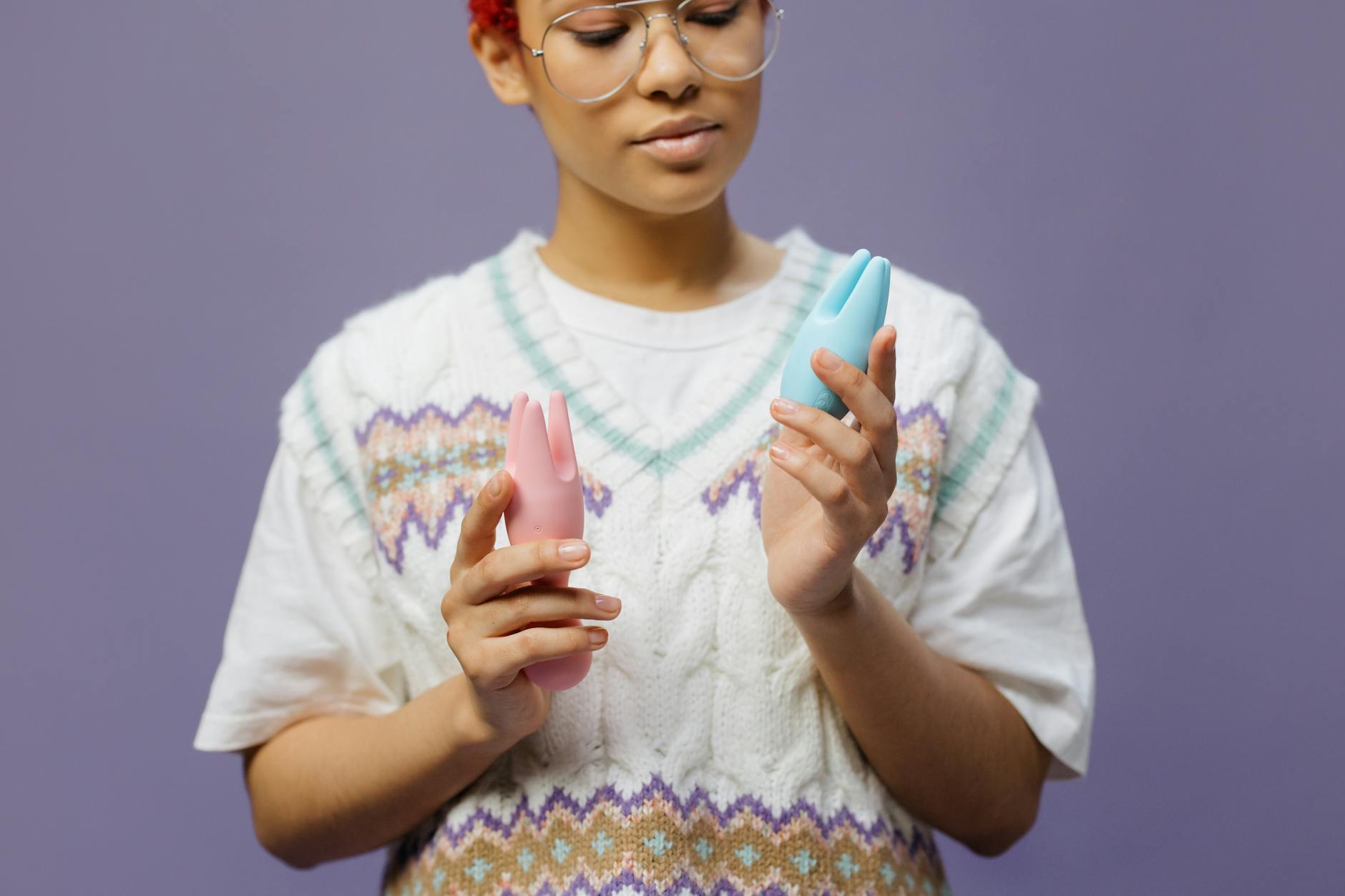
Let's talk about lube discomfort
Here's the thing nobody mentions in those "use lube for better sensation" posts. For some people, lube makes the experience actively worse. Not because they don't need it, but because the lube itself creates irritation, numbness, or that awful sticky feeling that kills momentum.
If you're someone who reaches for a lemon clitoral vibrator and then dreads the lube step, you're not alone. And you're not broken. You just need a different approach.
Why lube can feel wrong
Lubricant discomfort usually falls into three buckets. First, there's the chemical sensitivity angle. Water-based lubes often contain glycerin, which can feed yeast and bacteria in some bodies. Others react to propylene glycol, parabens, or silicones. Silicone-based lubes feel amazing to some people but can create a numb, disconnected sensation for others. Some folks find them too thick or sticky, like they're wrestling with the lube instead of enjoying the toy.
Second, there's the amount problem. Too much lube dulls sensation. Too little creates friction that feels wrong. The "right" amount is wildly individual, and most people guess wrong on their first try.
Third, there's a biological reality nobody talks about. Some people's bodies simply don't play well with added lubrication. Their natural lubrication (or lack thereof) is their body's way of communicating something. Overriding that with external lube can feel like forcing the experience instead of following what feels good.
When lube is actually optional
Lemon sucker vibrators and other clitoral toys work differently than penetrative toys. The clitoris is an external nerve-rich structure. It doesn't require the same kind of gliding sensation that internal stimulation does. Translation: you might not need lube at all.
Test this. Wash your hands, make sure the toy is clean, and try direct stimulation without anything added. Start at a low pattern on your lemon vibrator. Many people find that the suction action plus their natural moisture is genuinely all they need. No product, no mess, no chemical reaction.
If that works for you, congrats. You've just eliminated a variable that was making things uncomfortable.
The lube experiment that actually works
If you do need lube, don't just grab whatever is next to the register. Run a patch test first. Apply a small amount to the inside of your arm or upper thigh. Wait 15 minutes. If there's redness, burning, or itching, cross it off the list. This saves you from that awful mid-session "something's wrong" moment.
Here's what to try in order of sensitivity-friendly success.
Hypoallergenic, fragrance-free water-based lubes. Brands without glycerin or propylene glycol exist. They're less common and usually cost more, but they're the safest bet if you're reactive. Look for minimal ingredient lists. Five to seven ingredients is better than twenty.
Coconut oil for external-only use. I say this knowing it's not traditional lube advice. But coconut oil is antimicrobial, doesn't contain chemicals most people react to, and feels luxurious. The only catch: don't use it with silicone toys (it can degrade the material). It works beautifully with silicone vibrators like the lemon clitoral vibrator if you're using it externally only. And test it first, obviously. Some people react to it.
Slippery elm or aloe vera gel. These are plant-based and trigger fewer reactions than traditional lubes. They feel a little different than silicone-based options but work well for external stimulation. The trade-off is they dry out faster, so you might need to reapply mid-session.
Going minimal. A tiny amount of saliva, a single drop of oil, or just relying on natural moisture. Some people find that less is genuinely more. Your lemon vibrator doesn't require a slick runway. It just needs enough contact to work.
The application strategy that changes everything
How you use lube matters more than which lube you use. Most people over-apply. You need maybe a dime-sized amount for the external clitoris. Not a teaspoon. Not a nickel-sized dollop. A dime.
Apply it directly to the toy, not to your body. Let it warm up for three to five seconds before you start. This prevents that cold, shocking sensation that can kill arousal instantly.
Start at the lowest intensity setting on your lemon vibrator and warm up for five to ten minutes before you switch to higher patterns. This gives your body time to generate its own lubrication, which means you might need less product than you think. Many people who complain about lube discomfort are actually just starting too fast and too intense.
The real problem nobody mentions
Sometimes lube discomfort isn't about the lube. It's about pressure or speed or not being mentally present. If using lube creates anxiety ("is this going to irritate me?"), that anxiety itself will keep you from relaxing and enjoying the sensation.
Try this. Next time you're using your lemon clitoral vibrator, notice if you're holding tension in your hips, legs, or pelvic floor because you're worried about the lube. Just noticing that pattern breaks it. Your body responds to permission.
When to talk to a professional
If every single lube creates burning, itching, or swelling, you might be dealing with something beyond sensitivity. Vulvovaginitis, dermatitis, or a yeast overgrowth can make any foreign product feel terrible. A gynecologist can actually diagnose this and offer topical treatments that make using any lube possible again.
If you're avoiding pleasure entirely because of lube anxiety, that's worth exploring with a therapist. Sometimes avoidance becomes a bigger problem than the original discomfort.
The shortcut to solving this
Honestly, the fastest path forward is simple: experiment alone, slowly, with minimal pressure on yourself to have a particular outcome. Try your lemon vibrator dry. Try it with one milliliter of a cheap water-based lube. Try it with coconut oil. Notice what feels genuinely good versus what you think should feel good.
Your body will tell you. You just have to listen instead of overriding it with a product that doesn't fit.
FAQ
Can I use regular hand lotion as lubricant with my lemon vibrator?
No. Hand lotion is designed for skin texture, not for intimate use. It's usually thick, can disrupt your body's pH balance, and often contains fragrance that will create irritation. Stick to products formulated for intimate areas, or skip lube entirely.
Does lube get less comfortable over time if I keep reapplying it?
Yes. If you're in a longer session, fresh lube works better than lube you've reapplied multiple times. The product breaks down, your body's own moisture mixes in, and the texture changes. If you notice it feeling different halfway through, wash off what's there, pat dry, and start fresh with a tiny amount.
What if I'm sensitive to literally everything, including coconut oil?
Then you might genuinely not be a lube person. Many people find that their body's natural moisture plus a clitoral toy like the lemon sucker is exactly enough. If that doesn't work, talk to a gynecologist. Sometimes sensitivity is treatable with topical treatments that open up more options for you.
Is it better to apply lube to the toy or to my body?
Apply it to the toy. It warms up faster, you use less of it, and you have more control over the amount. When you apply it to your body, it often spreads in directions you didn't intend, and you lose track of how much you've used.
Can silicone-based lube damage silicone toys?
Yes, it can degrade them over time. Water-based lube is safer for silicone toys like most lemon vibrators. If you love the feel of silicone lube, look for glass or stainless steel toys instead.
Should I use more lube if the sensation feels numb?
No. More lube will make it worse. What you actually need is less lube, or no lube, plus a slightly higher intensity setting. Numbness from lube is your body telling you the barrier is too thick. Remove it, not add to it.