
How to Use Lemon Vibrators When Recovery From Surgery Affects Intimacy
Let's start with the honest part. Surgery disrupts everything. Your body feels foreign. Pain medication clouds your head. Your partner either hovers too much or gives you so much space you feel abandoned. Somewhere in that chaos, you realize that your sex life has basically vanished, and nobody warned you that would happen.
Here's what nobody tells you in the discharge papers: you can have pleasure during recovery. Not the same pleasure as before, and not in the same way, but real, grounded, utterly safe pleasure. It just requires a different approach.
Why post-surgical recovery feels so different
Surgery is trauma, even when it's planned and necessary. Your nervous system has literally been activated in a way it normally isn't. Add pain medication, limited mobility, scar tissue sensitivity, and the psychological weight of depending on someone else for basic tasks, and it makes total sense that desire would disappear.
But here's what's easy to miss: the absence of desire isn't permanent. It's situational. Your body is in survival mode. That's not a character flaw. That's biology doing exactly what it should do.
The second part—and this matters for reclaiming pleasure—is that surgical healing creates zones of numbness, hypersensitivity, and awkward disconnection from your own body. You might feel numb near the incision site, or oversensitive in unexpected places. Touch that felt normal before surgery now feels either like nothing or too much.
This is where lemon vibrators become genuinely useful. Unlike hands, which require positioning and pressure, a quality clitoral vibrator like the Lem works through suction and gentle pulse patterns. That distinction matters hugely for recovery bodies.
What you need to know before starting
First: talk to your surgeon or your GP before resuming any sexual activity, including solo play. Most surgeons clear you for clitoral stimulation well before penetration because it doesn't affect surgical sites and doesn't elevate blood pressure in the same way. But the timeline varies depending on what was removed, repaired, or reconstructed.
Second, understand your incision zones. If surgery was abdominal, your lower abdomen and pelvic area need careful attention. If it was gynecological, your surgeon will tell you exactly what's healing and what's not. Knowing the geography matters because you'll need to avoid pressure near the actual incision while still being able to access the clitoris, which typically sits well outside any surgical field.
Third, pain and pleasure use some of the same neural pathways, which means post-surgical pain can genuinely block arousal signals. If you're in significant pain even when cleared for activity, that's worth addressing before expecting pleasure to show up.
How to ease back in safely
The gold standard timeline looks like this:
Weeks 1-2 post-op: You're barely sitting upright. Pleasure is not the goal. Let your body rest.
Weeks 3-4: If your surgeon has cleared you, begin exploring very gently—like, barely-touching-the-clitoris exploration. Use a lemon clitoral vibrator on the lowest pattern setting. The goal is reconnection, not orgasm. Spend five minutes maximum just noticing sensation. Notice what feels numb. Notice what feels raw. Notice if touching the area creates a pulling sensation from the incision site (that means you're activating muscles that are still healing).
Weeks 5-8: If no pain is appearing, gradually increase time and intensity. Move from pattern 1 to pattern 2. Extend sessions to 10-15 minutes if it feels right. Your goal isn't an orgasm yet. It's rebuilding the conversation between your brain and your body.
Week 8 onward: Most people are cleared for more vigorous activity by eight weeks, though this varies wildly depending on the surgery. If you're interested in orgasm again, lemon vibrators excel here because they deliver consistent, focused stimulation without requiring you to hold a position or do any work.
The psychological shift that matters most
Honestly? The body recovers faster than the mind does. Long after your incision is healed, you might feel hypervigilant about pain, afraid of breaking something, or convinced that your body has been permanently altered and is no longer worthy of pleasure.
This is normal. It's also solvable.
What helps is separating the story you're telling yourself ("I'm broken, I'm no longer sexual, my partner has moved on") from what's actually true ("I'm healing on schedule, and pleasure is available to me once my body is ready").
If you have a partner, talking about this explicitly helps immensely. Not a vague conversation about "when we can have sex again," but an actual conversation about what pleasure looks like during recovery. That might be you using a lemon vibrator while your partner reads nearby. It might be your partner watching, or touching you elsewhere while you focus on gentle clitoral stimulation. It might be you alone, relearning what your body can feel.
The key is removing the expectation that it needs to look like sex. It's just... pleasure. Reconnection. A way of saying "my body is still mine."
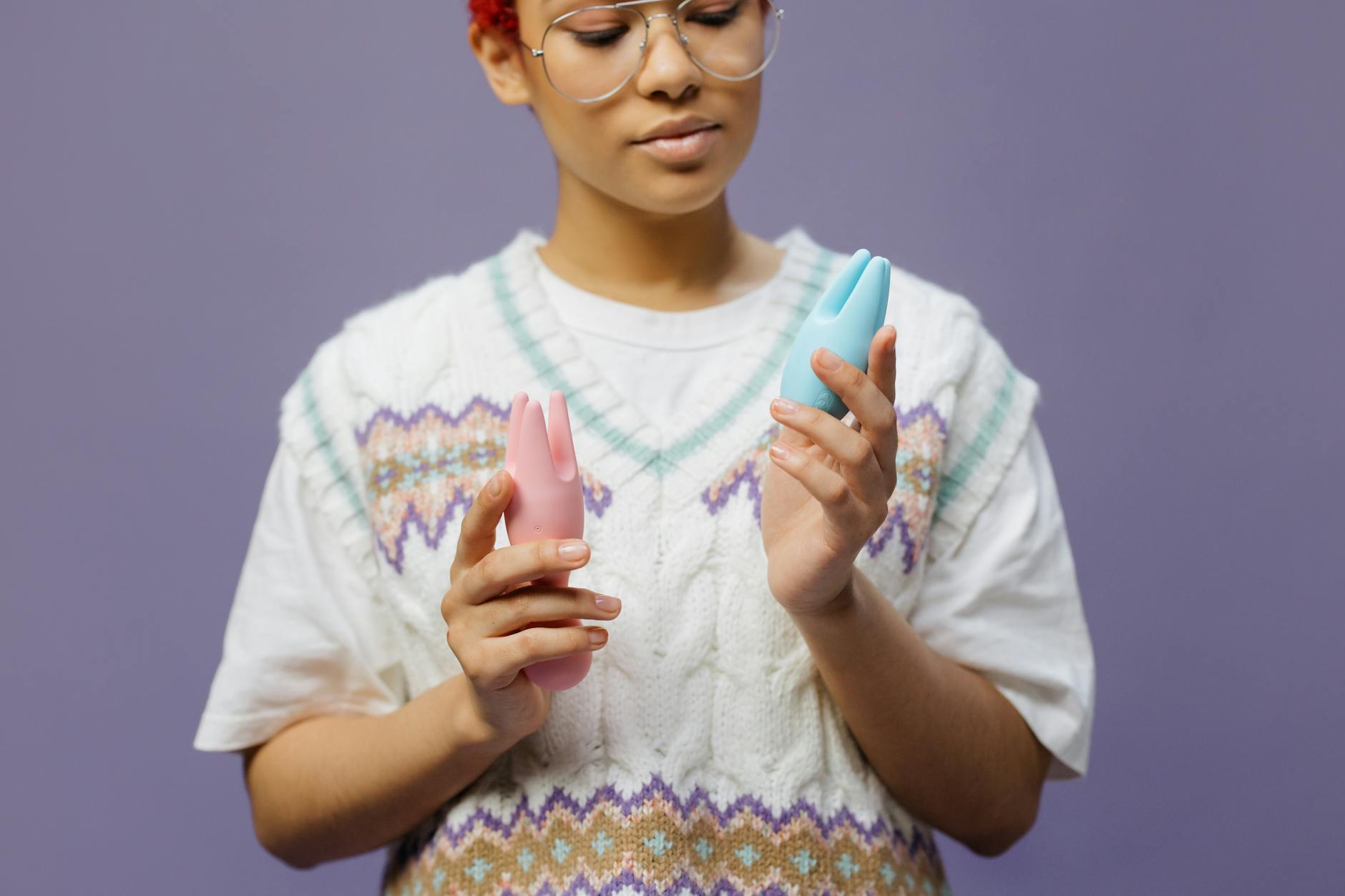
Photo by cottonbro studio on Pexels
Common specific scenarios and how to adapt
After abdominal surgery (C-section, hysterectomy, appendectomy): Avoid any pressure on your lower belly. Lie flat on your back with knees slightly bent, or recline at an angle. Use the Lem on lower patterns. If pulling sensations appear, stop. If numbness is the issue, you might need longer warm-up time or slightly higher intensity than you'd normally use.
After gynecological surgery (D&C, fibroid removal, endometriosis excision): Your surgeon will tell you about penetration restrictions, but clitoral play is usually cleared earlier. If internal scarring is a concern, external-only stimulation is your friend. Lemon clitoral vibrators are perfect for this because they work entirely on the external clitoris.
After breast surgery: Pain location is totally different from the clitoris, so physically you might be fine. But emotionally? Breast surgery often hits different. Your body feels foreign even though the surgery site isn't near your genitals. This is where the psychological work matters most. Give yourself permission to explore slowly. The sensations will return.
After surgery requiring pain management: Strong painkillers dull sensation everywhere, not just at the incision site. You might find that lemon vibrators feel like almost nothing. This is temporary. As you taper pain medication (which happens gradually, always under medical guidance), sensation returns. Don't assume numbness is permanent.
When to check in with your medical team
Pain during or after intimate activity is a stop sign. Full stop. Not a "wait it out" situation. Sharp pain, throbbing, feeling like something is tearing—that's your surgeon's territory.
Similarly, if arousal genuinely hasn't returned by week 12 post-op and pain is resolved, talking to your GP or a pelvic floor specialist makes sense. Sometimes desensitization to pleasure is psychological (treatable with therapy or patience), and sometimes there's a physical component worth addressing.
If you're on hormonal medications post-surgery (like tamoxifen or hormone suppressors), that can flatten desire too. That's worth discussing with your prescribing doctor—often there are adjustments or parallel strategies.
The longer timeline: six months and beyond
Most people feel "back to normal" in their body somewhere between three and six months post-op, though scar tissue and nerve regeneration can take longer. You might discover that arousal takes longer than it used to, or that certain kinds of stimulation feel uncomfortable.
This is information, not failure. Your body has been through something. It's allowed to be different now.
Many people find that using lemon clitoral vibrators during recovery actually rebuilds intimacy with their partners in unexpected ways. The focus shifts from performance to presence. From "can we have sex" to "can we connect." That foundation makes the eventual return to a fuller sex life richer, not just physically but emotionally.
Frequently asked questions
How soon after surgery can I use any vibrator at all?
Most surgeons clear external clitoral stimulation by week 3-4 post-op, assuming pain is controlled and you're not on high-dose opioids that would mask pain signals. But ask your specific surgeon—surgical techniques vary, and your surgeon knows your exact situation. Don't guess.
Will vibrator use interfere with incision healing?
No, assuming your incision isn't in the clitoral region (extremely rare). Clitoral stimulation doesn't increase blood pressure the way full sexual activity does, and it doesn't create abdominal tension. The only risk is if you're applying pressure directly to the incision site, which you wouldn't be doing for clitoral play.
What if I feel guilty about wanting pleasure while I'm "supposed to be resting"?
That guilt is incredibly common and completely unfounded. Pleasure promotes healing. Orgasms increase blood flow, reduce pain perception, and calm the nervous system. From a medical standpoint, gentle pleasure during recovery is actually healthy. From a human standpoint, you deserve to feel good while your body is going through trauma.
My partner feels uncomfortable with me using a vibrator during recovery. How do I talk about this?
Gently, directly, separately from any sexual context. Something like: "I want to reconnect with my body while I'm healing. That's not about what you aren't giving me—it's about me taking care of myself." If your partner's discomfort is really about feeling replaced or inadequate, that's a conversation worth having with both of you present, maybe even with a therapist. Learning to explore solo while in a partnership is its own skill.
Is recovery the right time to try a vibrator for the first time?
It can be, actually. You're in a "something has already changed in my body" mindset, so the mental barrier to trying something new is lower. Just go slow. If using a lemon vibrator during recovery helps you reconnect with pleasure, that's wonderful. If it feels like too much, that's fine too. You can always revisit once you're fully healed.
What if I don't feel pleasure coming back, even months post-op?
First: talk to your doctor. There are medical reasons pleasure can be delayed (hormone shifts, medication side effects, nerve damage in rare cases). Second: talk to a therapist. Sometimes the psychological impact of surgery sits deeper than we realize, and that's not something a vibrator can fix. Third: be patient with yourself. Pleasure isn't a switch. It's something that rebuilds gradually, and that's okay.
Recovery is temporary, even when it feels permanent. Your body will heal. Your desire will return. And when it does, tools like lemon clitoral vibrators can help you explore sensation in ways that feel safe, grounded, and genuinely yours. That's not a consolation prize. That's a gift.