When recovery rewires intimacy
Let's be real. If you're in recovery from addiction or working through trauma in therapy, pleasure can feel complicated in ways that don't fit neatly into conversation. Your nervous system might not trust sensation the way it used to. Desire might feel absent, or it might feel intrusive. Your body might feel like it belongs to someone else's timeline, not yours.
This is not unusual, and it's not broken. It's actually a sign that you're paying attention to what your system needs. The work of rebuilding intimacy after recovery is real work, and it deserves real tools.
Lemon vibrators, especially their gentle suction design, can be part of that toolkit. Not as a fix. As a compass.
Why suction works differently than vibration when trust is fragile
Most vibrators work through rhythmic oscillation. They're predictable, which is good, but they also create a kind of pressure that can feel invasive if your nervous system is still in high alert. Suction is different. It's a gentler pull that creates sensation without the mechanical force.
When you've been through recovery, the body sometimes responds better to sensation that feels less aggressive. Suction mimics the natural rhythms of arousal, which means your nervous system recognizes it as aligned with what pleasure actually feels like, not imposed on top of it.
This matters because rebuilding intimacy is not about forcing sensation to work again. It's about creating conditions where your body can remember what safety feels like alongside desire.
The reset protocol: three phases of reconnection
I recommend thinking of this in phases rather than as a linear progression, because recovery isn't linear and neither is pleasure.
Phase One: Sensation mapping without expectation. The first time you use a lemon vibrator during recovery, don't aim for orgasm. Don't aim for anything. Set 10 minutes, find privacy, and just notice what happens when you introduce gentle sensation to your body. Does your breath change? Does your leg tense up? Does your mind jump to something else? This is data. It's not failure if you feel nothing. The point is noticing.
Phase Two: Building tolerance for feeling. Once you've mapped where sensation lands, spend the next 2-3 weeks using the lemon vibrator for 5-15 minutes at intensity levels 1-2. Not trying to climax. Just practicing staying present with a pleasant sensation. Your nervous system is learning that pleasure doesn't have to escalate. It can just exist.
Phase Three: Reconnection with intentionality. After a few weeks of consistent, low-pressure exploration, you might find that climax feels possible again. When it does, let it happen. If it doesn't, that's fine too. You've already accomplished the real work, which is trusting your body enough to feel something good without needing it to go anywhere.
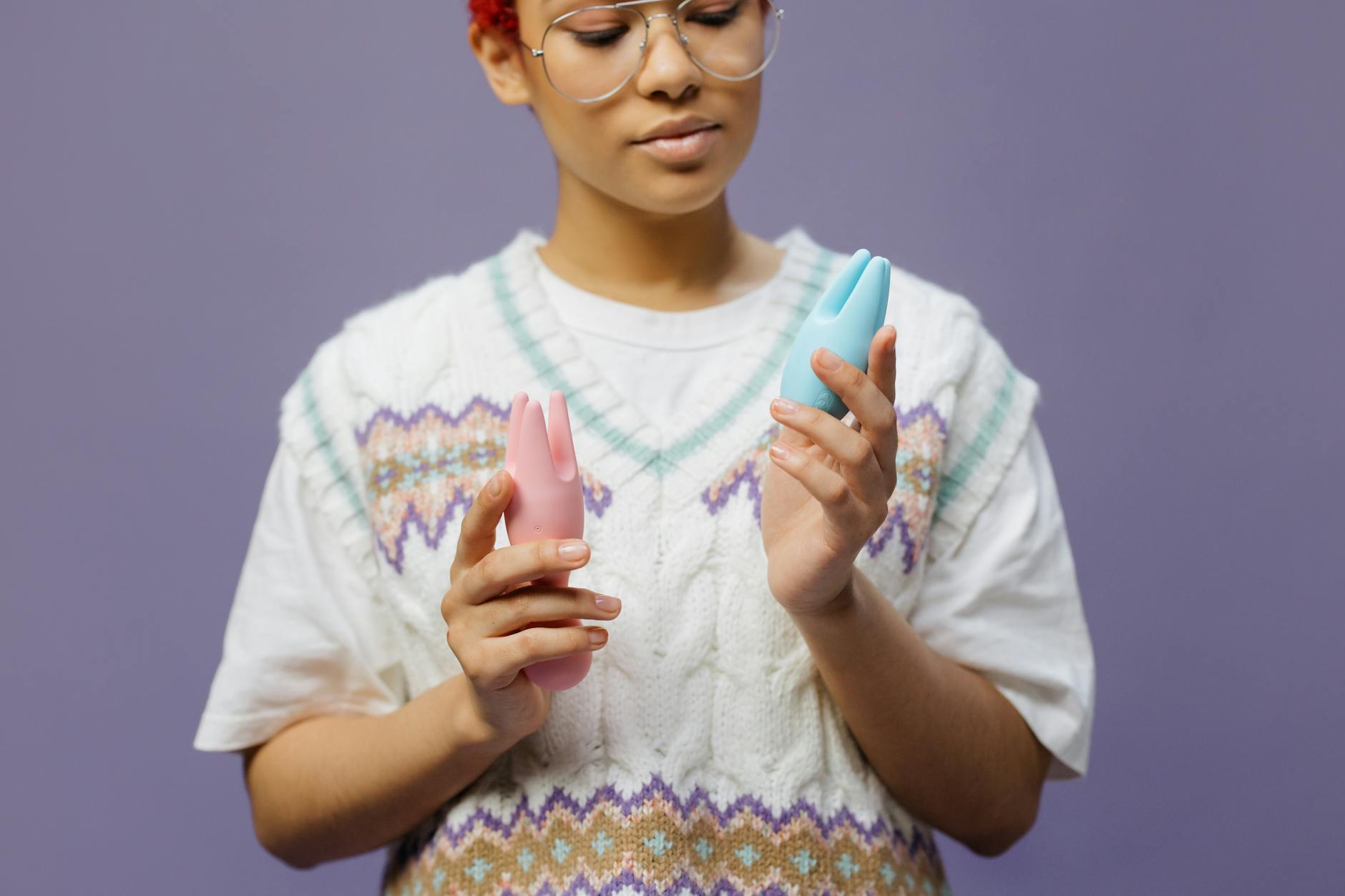
Photo by cottonbro studio on Pexels
Setting boundaries that actually stick
Recovery teaches you (hopefully) that boundaries aren't punishment. They're protection. That applies to pleasure too. Before you start using lemon vibrators during recovery, get clear on your own boundaries.
Here's what I mean: decide in advance what you will and won't do. Will you explore solo only for the first month? Will you not use it within two hours of a meal? Will you keep it in a specific drawer so it's always a conscious choice to access it, not something you grab mindlessly? Will you pair it with a specific time of day?
These aren't rules. They're containers. They tell your nervous system that this is intentional and that you're in control. Control is the thing recovery often took from you. Reclaiming it through small, deliberate choices around pleasure is part of the healing.
One more thing: if you're in a relationship, have a conversation with your partner about what you're doing and why before you start. You don't need to invite them to participate. You do need them to understand that this is part of your recovery work and it has nothing to do with them.
When to use the lemon vibrator, and when to pause
Timing matters more than you'd think. Don't use lemon vibrators when you're stressed, tired, or emotionally dysregulated. That's not the nervous system state where pleasure can actually land. Aim for times when you feel relatively calm, physically rested, and able to be alone without interruption.
Most people in recovery find success using lemon vibrators in the morning after coffee or in the early evening after work, but before dinner or major stress. The goal is a window where your body can actually receive sensation.
Pause if you notice patterns like: using it to numb instead of to feel; using it as a compulsive loop instead of intentional exploration; experiencing shame afterward instead of neutral or positive feelings; or finding it triggering your substance of choice or other addictive behaviors.
These are signals that the tool isn't serving your recovery right now. That's not failure. That's your system telling you to adjust. Talk to your therapist if that happens. There are other ways forward.
Managing the shame that shows up
Here's something nobody tells you: recovering pleasure after addiction recovery or intensive trauma work can come with weird shame. Not because there's anything wrong with pleasure, but because shame was often the emotional architecture that supported the addiction or the trauma in the first place.
Your brain might interpret pleasure as dangerous. It might whisper that you're relapsing into old patterns, or that you don't deserve this, or that wanting sensation means you're failing at recovery.
That's normal. It's also not true. One way to manage it: before you use a lemon vibrator, say it out loud. "I'm going to explore my body with a lemon vibrator for 10 minutes because I deserve to feel good. This is part of my recovery, not separate from it." It sounds silly. It works.
When shame shows up during or after, name it too. Don't argue with it. Just say: "That's the old story. This is new. My body is allowed to feel pleasure." Then move on.
Why the Lem's design matters for this specific work
If you're considering a lemon clitoral vibrator like the Lem specifically, its suction design has advantages for recovery work. The gentle pull sensation doesn't override your nervous system. It works with it. The patterns are customizable, so you can start incredibly gentle (pattern one is basically a whisper) and gradually build if that feels right.
More importantly, there's something about the gentleness of suction that feels less clinical than traditional vibrators. It feels more intimate, more like partnered touch, which can help rebuild the nervous system's association between sensation and safety.
But a lemon vibrator is only part of the toolkit. The real work is the intention you bring to it.
When to bring your partner in
Solo exploration comes first. That's non-negotiable. You need to know your own body's landscape before inviting someone else into it. Once you've spent a few weeks with consistent, grounding solo sessions using lemon vibrators, you might feel ready to explore with a partner.
If you do, go slow. You might ask your partner to simply be present while you use the lemon vibrator solo. Not joining, not performing, just being in the room. That rebuilds trust and shared intimacy without pressure.
The next step might be letting them hold the vibrator while you control the pattern and intensity. Then eventually, actual partnered exploration. But this progression might take months. That's not slow. That's wise.
Practical questions that come up
Q: Will using a lemon vibrator interfere with my recovery plan or therapy?
A: Not if you're intentional about it and honest with your therapist. In fact, many therapists working with addiction recovery or trauma consider solo pleasure a healthy part of reclaiming your body. But you should tell your therapist what you're doing. Not all of it, unless you want to. Just enough that they know and can help you notice patterns. Recovery thrives on honesty.
Q: What if I don't feel anything the first time?
A: That's completely normal. Your nervous system might not be ready to receive sensation yet. Give it time. Keep trying in short, low-pressure sessions. It can take weeks for the system to unfreeze. If nothing shifts after a month of consistent, gentle exploration, talk to your therapist. Sometimes the body needs different support first.
Q: Is it bad if I want to use the lemon vibrator a lot?
A: Frequent use is fine. Compulsive use is different. If you're using it to avoid feeling something else (anxiety, grief, restlessness), pause and check in with yourself. If you're using it because you enjoy it and it feels grounding, that's good.
Q: What if my partner feels threatened by me exploring with a vibrator?
A: That's a conversation, not a barrier to your recovery. Your pleasure is part of your healing. A partner who can't support that might need some education or couples work. You shouldn't abandon your recovery to manage their insecurity. A good therapist can help you navigate that conversation.
Q: Can I use the lemon vibrator if I'm on psychiatric medication?
A: Yes, generally. Some medications affect sensation or arousal, but that's not a contraindication to using a vibrator. It just means your experience might be different than expected. Start slow and notice. If you have specific concerns, ask your prescriber.
Q: How do I know if I'm using the lemon vibrator as part of recovery versus as avoidance?
A: Notice how you feel after. Recovery work leaves you feeling more grounded, more in your body. Avoidance leaves you feeling numb or disconnected. If you're using it to escape, you'll know. The signal is usually shame or emptiness afterward. If you're using it to reconnect, you usually feel calmer, more present, or just neutral and tired in a good way.
The throughline
Recovery is about slowly, deliberately reclaiming the parts of yourself that got locked away. Pleasure is one of those parts. Using lemon vibrators during recovery isn't frivolous. It's radical. It's you telling your nervous system, over and over again, that your body is yours. That sensation can be safe. That you deserve to feel good.
That's the work. The vibrator is just the vehicle.
If you have specific questions about how to use lemon vibrators within your recovery framework, reach out to our team. We're here to support your journey without pressure or judgment.