How to Use Lemon Vibrators When Sensation Changes With Stress
Let's be real: when your nervous system is flooded, your body stops listening. Stress hijacks arousal. It kills sensation. And it makes everything feel like you're touching the world through a thick pane of glass. Then you pick up your lemon vibrator, expecting the usual spark, and instead get nothing. That's not a device problem. That's a nervous system problem.
Here's what's happening physiologically and what actually fixes it.
The neurobiology of stress numbing
When you're under chronic stress, your sympathetic nervous system stays activated. Think of it as your body's gas pedal stuck on high. Your brain is literally less responsive to pleasure signals because cortisol and adrenaline are monopolizing the show. Blood flow redirects away from your genitals and toward your muscles and heart. Sensation flattens. Orgasms feel distant or impossible.
This isn't laziness or loss of desire. It's biology. Your nervous system has prioritized survival over pleasure, which makes perfect evolutionary sense. The problem is that modern stress is chronic, not acute, so your body never gets the signal to switch gears back to calm.
The solution isn't to push harder with your lemon vibrator. It's to reset the nervous system first, then reintroduce sensation carefully.
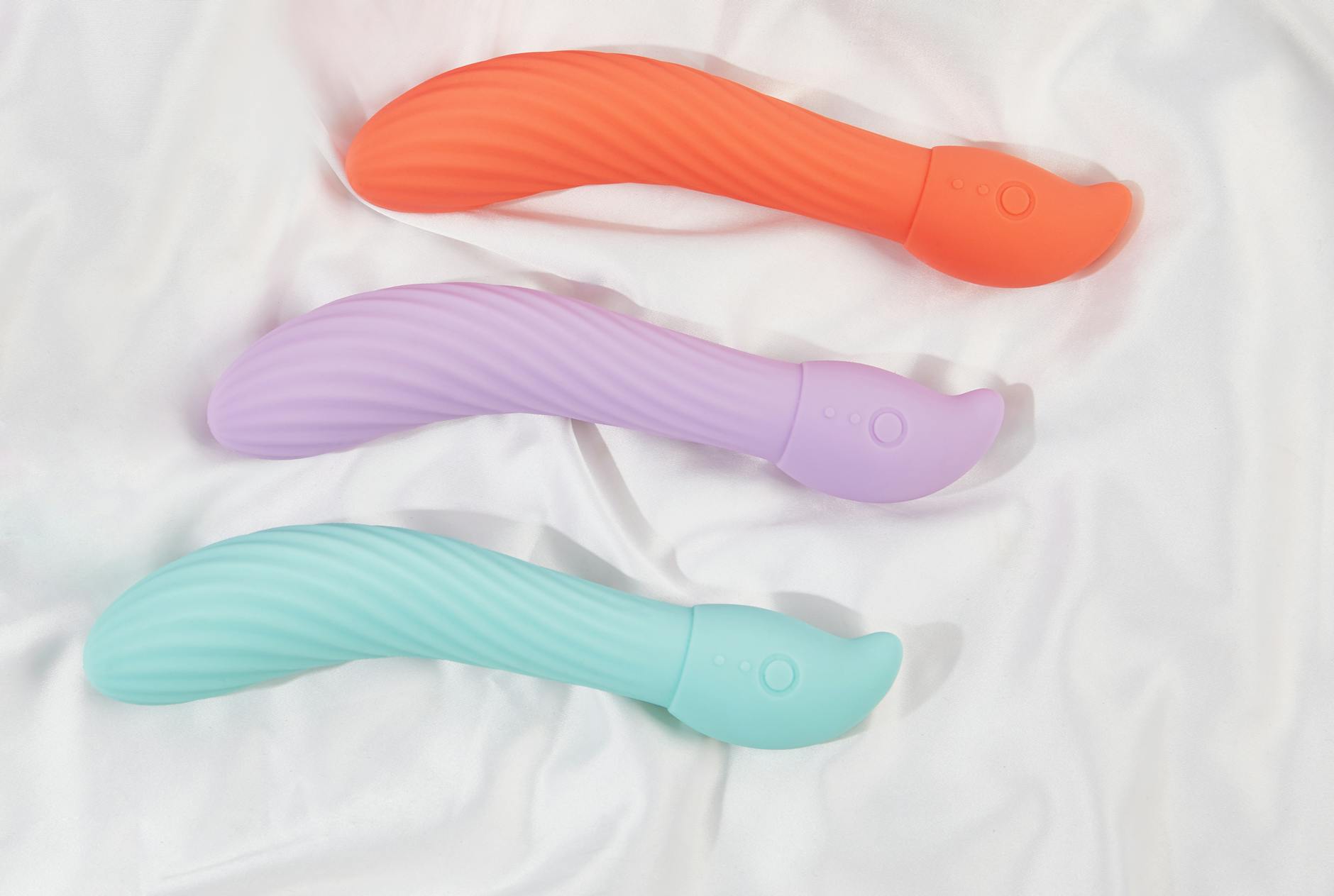
Photo by IFONNX Toys on Pexels
Why intensity feels like nothing when you're stressed
You might have noticed something specific: on a normal day, your lemon vibrator's mid-range setting feels incredible. When stress peaks, even the highest setting feels like a faint vibration. You're not broken. Your sensory threshold has literally shifted upward because your nervous system is primed for threat.
The instinct is to crank the intensity. Resist it. Higher intensity actually trains your nervous system to need more and more stimulation, which makes the problem worse. Instead, you need to lower intensity and lengthen duration. Give your nervous system time to recognize that this touch is safe, not another demand.
This is where most people get stuck. They either abandon the lemon vibrator entirely ("it's not working anyway") or they use it aggressively in ways that create tension rather than release. Neither works.
The three-phase reset for sensation under stress
Phase 1: Parasympathetic priming (before you touch yourself).
You can't arouse a nervous system in fight-or-flight mode. Spend 5-10 minutes activating your parasympathetic system first. This isn't woo. It's vagal tone. Try box breathing: inhale for four counts, hold for four, exhale for four, hold for four. Repeat eight times. Or take a hot bath. Or progressive muscle relaxation where you tense and release each muscle group slowly. The goal is measurable physiological shift. You should feel your shoulders drop, your jaw unclench, your breathing slow.
Don't skip this. It's not foreplay. It's the foundation.
Phase 2: Non-stimulation touch (reconnecting to sensation without pressure).
Once your nervous system is slightly calmer, spend time touching yourself without any device. Slow, light touch with your fingertips on your inner thighs, your hip bones, your lower belly. Not for arousal. For sensation reconnaissance. You're teaching your nervous system that touch is safe and that you're in control. This phase usually takes 5-15 minutes and should feel genuinely relaxing, not urgent.
Phase 3: Lemon vibrator reintroduction (starting low and wide).
Only now do you introduce your lemon clitoral vibrator. Start on the lowest setting. The pattern doesn't matter yet. What matters is duration and consistency. Keep the lemon vibrator on your body for 10-15 minutes minimum at low intensity, even if you don't feel much. Your nervous system needs to learn that this sensation is safe and predictable. Arousal often lags behind. You might not feel anything until minute 8 or 9. That's normal when you're stress-depleted.
The retraining timeline
Don't expect full sensation recovery in one session. When stress has been high for weeks or months, your nervous system has formed strong pathways. It takes consistent practice to build new ones.
During the first week, stick to Phase 1 and Phase 2 only. Your only job is to practice the breathing and the touch work. No lemon vibrator yet.
Week two, introduce the vibrator at the lowest setting for 10-15 minute sessions, three to four times per week. You're not trying to orgasm. You're rebuilding sensory awareness.
Week three and four, if sensation is returning, you can gradually increase time and experiment with patterns two or three. Stay on relatively low intensity.
By week five or six, many people report that sensation feels closer to baseline. This varies wildly depending on stress levels and whether you're actively addressing the underlying stress.
The stress-specific adjustments to make
Three things shift when you're using lemon vibrators under chronic stress.
Longer warm-up windows. You might usually need 10 minutes of foreplay. Stress-depleted, budget 20-30. Your nervous system is slower to register safety, so slower approach works better.
Lower starting intensity. If you usually start on setting three or four, drop to one or two. The point is consistency and duration, not fireworks.
Shorter sessions with more frequency. Instead of one 30-minute session, try four 10-minute sessions spread across the week. Shorter sessions are less overwhelming for a stressed nervous system, and frequency builds new neural pathways faster than duration alone.
Many of my clients also find that using the lemon vibrator at a specific time each day (morning coffee, right before bed) creates ritual that actually helps calm the nervous system. Your brain starts to anticipate this as a moment of safety.
When to add partner involvement
If you have a partner, resist the urge to involve them in this reset phase. This isn't about rejection. It's about clarity. When a partner is present, there's social pressure (conscious or not) to perform or to feel aroused. That pressure is exactly what's blocking sensation right now.
Claim this time for solo practice first. Once sensation is returning and you're in Phase 3 consistently, then you can explore partner scenarios. Check out our guide on how to use lemon vibrators with a partner without awkwardness for that conversation.
The underlying stress piece you can't skip
Here's the hard truth: if the stress isn't addressed, the sensation reset won't stick. You can retrain your nervous system perfectly, and then spend 14 hours in back-to-back meetings, and you're back to square one.
This doesn't mean you need a vacation (though great if you can get one). It means identifying what's actually driving the stress and making one small structural change. If it's work, that might be protecting one evening per week as truly off. If it's a relationship dynamic, that might be a conversation you've been avoiding. If it's grief or major life transition, it might be talking to a therapist.
Your lemon vibrator is a brilliant tool for pleasure. It's not a substitute for addressing the thing that's actually stealing your nervous system's bandwidth.
FAQs: sensation, stress, and lemon vibrators
Why does stress kill sensation faster than other things?
Stress activates your sympathetic nervous system, which diverts blood flow away from your genitals and toward your limbs and heart. Simultaneously, cortisol suppresses dopamine and reduces genital blood flow. It's a one-two punch. Additionally, stress keeps your nervous system in a state of hypervigilance, which makes your brain less responsive to pleasure signals. Unlike hormonal changes or age, which shift sensation gradually, stress can flatten sensation within days.
Can I use my lemon vibrator to help with stress relief even if I'm not trying to orgasm?
Absolutely. Many people find that the focused attention required for lemon vibrator use actually functions as a form of meditation. The combination of parasympathetic activation (from the warmth and touch) plus the rhythmic stimulation can genuinely lower cortisol. The goal becomes nervous system reset rather than orgasm. You might be surprised how often orgasm follows once the nervous system is calmer, but that's a bonus, not the point.
How do I know if it's stress or something else dulling my sensation?
Stress sensation loss has a few tells. It comes on relatively suddenly when stress increases. It affects your whole body, not just genital sensation. You also typically feel numb in other ways: less interest in food, less pleasure from activities you usually enjoy, harder to focus. If sensation loss is isolated to sexual response and happened more gradually, it might be hormonal or medication-related. If you're unsure, it's worth checking in with your doctor to rule out other factors.
Should I stop using my lemon vibrator until stress decreases?
No. Stopping completely can actually make the problem worse because you lose the sensory feedback loop entirely. Instead, use it intentionally and gently as part of your reset. Think of it as re-sensitizing your nervous system rather than chasing pleasure. The reintroduction process itself is therapeutic.
Is it normal for arousal to take longer under stress even after using my lemon vibrator for a while?
Completely. Recovery isn't always linear. Some days your nervous system will be calmer than others depending on what happened earlier that day. On high-stress days, even with consistent lemon vibrator practice, arousal might take longer. This is information, not failure. It tells you your nervous system is still processing something. Be patient with the timeline.
What patterns work best on a lemon vibrator when I'm stressed?
When stress is high, patterns don't matter much because sensation is already muted. Start with whatever pattern feels most gentle (usually pattern one on most clitoral vibrators). As sensation returns, you can experiment. But honestly, consistency and duration matter far more than pattern choice during the reset phase. Save the pattern experimentation for when your nervous system is actually responding.
Getting back to feeling everything
Stress doesn't permanently change your nervous system. It hijacks it temporarily. That means sensation is recoverable, usually within four to eight weeks of consistent, gentle retraining. Your lemon vibrator is a perfect tool for that retraining because it gives you precise control over intensity and can be used regularly without fatigue.
The key is patience with yourself. Your body isn't broken. It's protecting itself. Help it feel safe again, and sensation follows.