Let's talk about what's actually happening
You want to explore. You've thought about touching yourself, maybe even picked up a toy. Then something stops you. Not your body. Your mind. That little voice saying masturbation is selfish, weird, unfeminine, indulgent, or just plain awkward. So you don't. And then you feel a different kind of stuck.
Here's the thing about self-consciousness during solo play: it's not about the toy. It's about permission. And permission isn't something you ask for. It's something you practice.
Why shame shows up specifically during solo play
Masturbation gets a strange cultural treatment. We're told it's normal, then taught it's something to hide. You might have grown up with messages that it was dirty, that your body was something to manage rather than enjoy, or that real pleasure only happens in a partnership. Solo pleasure gets coded as less legitimate somehow.
That contradiction creates friction. You intellectually understand that solo exploration is healthy. But somewhere deeper, you're still carrying the old belief that it shouldn't feel good, or at least shouldn't feel intentional. Intentional pleasure is the part that trips people up.
When you're with a partner, there's permission built in. Someone else is present and participating. But when you're alone? You're the one choosing your own pleasure. That level of agency can feel uncomfortable if you've never practiced it.
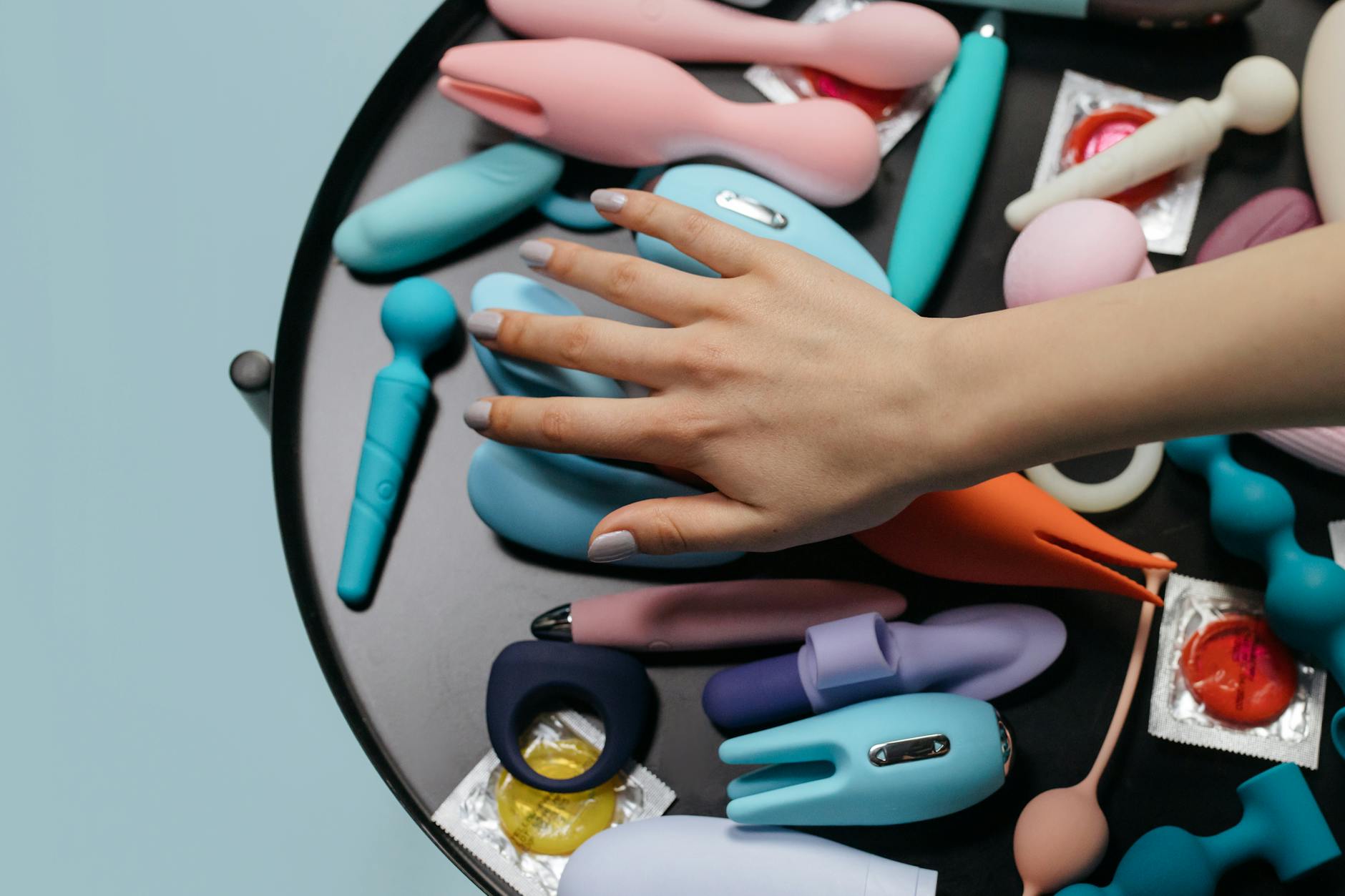
Lemon vibrators, specifically the air-suction design, can help shift this because they move the focus away from performance and toward sensation. You're not performing. You're experimenting.
Start with reframing what masturbation actually is
It's not indulgence. It's research. You're collecting data about your own body. What patterns feel good. What intensity works. Where your pleasure lives. That information is useful whether you're solo or with a partner.
When you frame solo exploration as research rather than recreation, the awkwardness often loosens. You're not being selfish. You're being thorough. You're learning something your body can't teach you any other way.
Try saying it out loud once: "I'm exploring what feels good on my body." Notice how differently that lands compared to "I'm masturbating." Same activity. Different permission structure.
The practical setup that removes witnesses
Your body can sense judgment. Not from another person. From yourself. That internal observer watching and evaluating makes solo play feel exposed even when you're alone.
Create a small change in environment that signals privacy to your nervous system. Close the door. Put your phone in another room. Dim the lights or light a candle. Use headphones with music or a white noise app. These aren't luxuries. They're removing the internal sense of being watched.
For many people, the self-consciousness drops significantly once they remove the sense that someone could walk in. Your brain relaxes. Your nervous system settles. Sensation becomes available.
Why lemon clitoral vibrators work for this specifically
Lemon sexual toys like the air-suction design work differently than traditional vibrators. Instead of direct vibration, they use a gentle suction pattern that feels more like a sensation than a tool. That's important when you're self-conscious.
With a standard vibrator, the feeling is obvious. You know exactly what's happening mechanically. With an air-suction toy, the sensation is more diffuse. It feels less like you're doing something to yourself and more like something is happening to you. That subtle shift in agency can quiet the internal observer.
Start on the lowest setting. Lemon vibrators are designed so pattern one is gentle enough that you can barely feel it at first. That gives you permission to be curious without diving into intensity. Curiosity is less threatening than pursuit.
Building a rhythm that doesn't feel rushed
Self-consciousness often pairs with rushing. You want to get it over with before the shame catches up. So you speed up, your body tenses, and pleasure becomes harder to find. Then you feel like something's wrong with you.
Nothing's wrong. You just need more time.
Give yourself at least thirty minutes when you try. Not because you need thirty minutes to orgasm, but because you need that much time for your nervous system to actually relax. The first ten to fifteen minutes are just unpacking the self-consciousness. Your body's still holding tension.
Use the first few minutes just exploring sensation without the goal of orgasm. Touch different areas. Notice what feels neutral versus what creates a spark. Most people discover during this exploration that what they thought they wanted is totally different from what actually works.
What to do when the shame voice shows up mid-session
It will. That's normal. Your nervous system has practiced shame longer than it's practiced pleasure. So when pleasure starts to build, there's often a spike of discomfort.
Here's what actually helps: you don't fight it. You acknowledge it. "There's that voice. That's the shame I was taught. I'm choosing something different right now." Then you redirect your attention back to sensation.
Don't pause. Don't stop. Don't apologize to yourself. Just notice the thought and keep going. Eventually the shame voice gets quieter because it realizes you're not listening.
If you stop mid-session because of shame, you're teaching your nervous system that shame is the correct response to pleasure. If you keep going despite the shame, you're teaching your nervous system that pleasure is worth the discomfort. Choose the second option.
The orgasm expectation that actually creates blocks
Many people hold back during solo play because they're waiting for an orgasm to validate the experience. If I don't come, it didn't count. If I came too fast, I did it wrong. This creates a performance framework around solo play. Which is exactly the opposite of what helps.
Orgasm is not the point. Pleasure is the point. Sometimes they're the same thing. Often they're not.
When you stop needing an orgasm to make solo exploration legitimate, something shifts. You relax. Your body relaxes. And very often, orgasm shows up. Not because you were chasing it, but because you stopped blocking yourself.
Try sessions where you explicitly say: "I'm not looking for an orgasm today. I'm just exploring." You'll probably be surprised how much pleasure becomes available once you remove that pressure.
Building a practice instead of a one-off event
One session where you feel self-conscious doesn't prove that solo play isn't for you. It proves you haven't built the skill yet. And yes, this is a skill. The skill of being in your own body without judgment.
Consider making this a practice. Once a week, maybe twice. Not because you have to, but because repetition teaches your nervous system that solo pleasure is safe. After a few sessions, the self-consciousness starts to normalize. Your body realizes nothing bad is happening. Your mind gets quieter.
Many people find that after a few weeks of regular solo exploration, they're not just more comfortable. They're actually eager. The awkwardness shifts into curiosity.
Connecting solo pleasure back to partnered sex
Here's what I see in my practice: people who explore solo tend to have better sex with partners. Not because partnered sex changes. Because they know what they want. They've felt it. They can ask for it.
A lemon clitoral vibrator or other quality lemon sexual toys also make great tools to bring into partnered sex once you've done solo work. You've already learned how to use them on yourself. You know what feels good. Teaching your partner becomes easier because you're not learning together from a place of shame.
When you're still stuck after trying
If self-consciousness keeps you blocked even with these approaches, that's worth exploring with a therapist. Not because something's wrong with you, but because the shame you're carrying probably goes beyond solo play. It touches how you see your own body, your right to pleasure, your sexuality more broadly.
That's deeper work. And it's work worth doing.
FAQ
How long does it typically take to get past self-consciousness during solo play?
Most people notice a shift after three to five sessions. That said, the timeline depends on how deep the shame runs. If you grew up with strong messaging that masturbation is wrong, it might take longer. If the self-consciousness is more situational, a few weeks usually does it. The key is consistency. One session a month won't rewire your nervous system the way once-weekly exploration will.
Does using a lemon vibrator actually help with self-consciousness, or is it just a tool?
It's both. The tool itself helps because air-suction stimulation creates a sensation that feels less mechanical and more diffuse. That can make solo play feel less obvious and clinical. But the real work is the permission and practice. The toy is just an object. What changes things is you showing up repeatedly and choosing your own pleasure despite the discomfort.
Is it normal to feel weird or grossed out when I first use a lemon clitoral vibrator solo?
Completely normal. Many people feel discomfort the first few times. That's not the toy. That's your nervous system adjusting to the idea that you're intentionally pursuing pleasure. The feeling usually passes once you get used to the sensation and the shame voice quiets down. Give it at least three tries before deciding it's not for you.
Can I use a lemon vibrator if I'm not sure what I like yet?
Yes. That's actually the ideal use case. A lemon vibrator's gentle suction patterns are great for exploration because they don't demand anything from you. You can try different patterns, different pressures, different areas. You're learning without performance pressure. That's how most people figure out what actually works for their body.
Should I feel guilty if solo play feels more satisfying than sex with my partner?
No. It's actually pretty common. You know your body better than anyone else does. Solo play has no performance pressure, no need to consider someone else's experience, no communication friction. Of course it can feel more straightforward. That doesn't mean partnered sex is broken. It just means the two experiences serve different purposes. Solo exploration teaches you what you want. Partnered sex is about connection and collaboration.
What if I try and nothing happens? Does that mean I'm not responsive?
It probably means your nervous system didn't fully relax yet. True sexual unresponsiveness is very rare. What's common is incomplete relaxation. Your body's still holding tension from the self-consciousness. That's why the longer, lower-pressure sessions matter. You're not trying to make something happen. You're waiting for your body to feel safe enough to respond. That takes time.
Your pleasure matters. It's not selfish. It's not weird. It's not something you need permission for. You already have it.
Ready to explore? Start small. Pick a quiet evening, a lemon vibrator or another quality clitoral toy, and give yourself real time. Notice what your body tells you. That information is valuable whether you reach orgasm or just learn something new about sensation.
If you want to go deeper into this work, reach out to us. We're here to help.