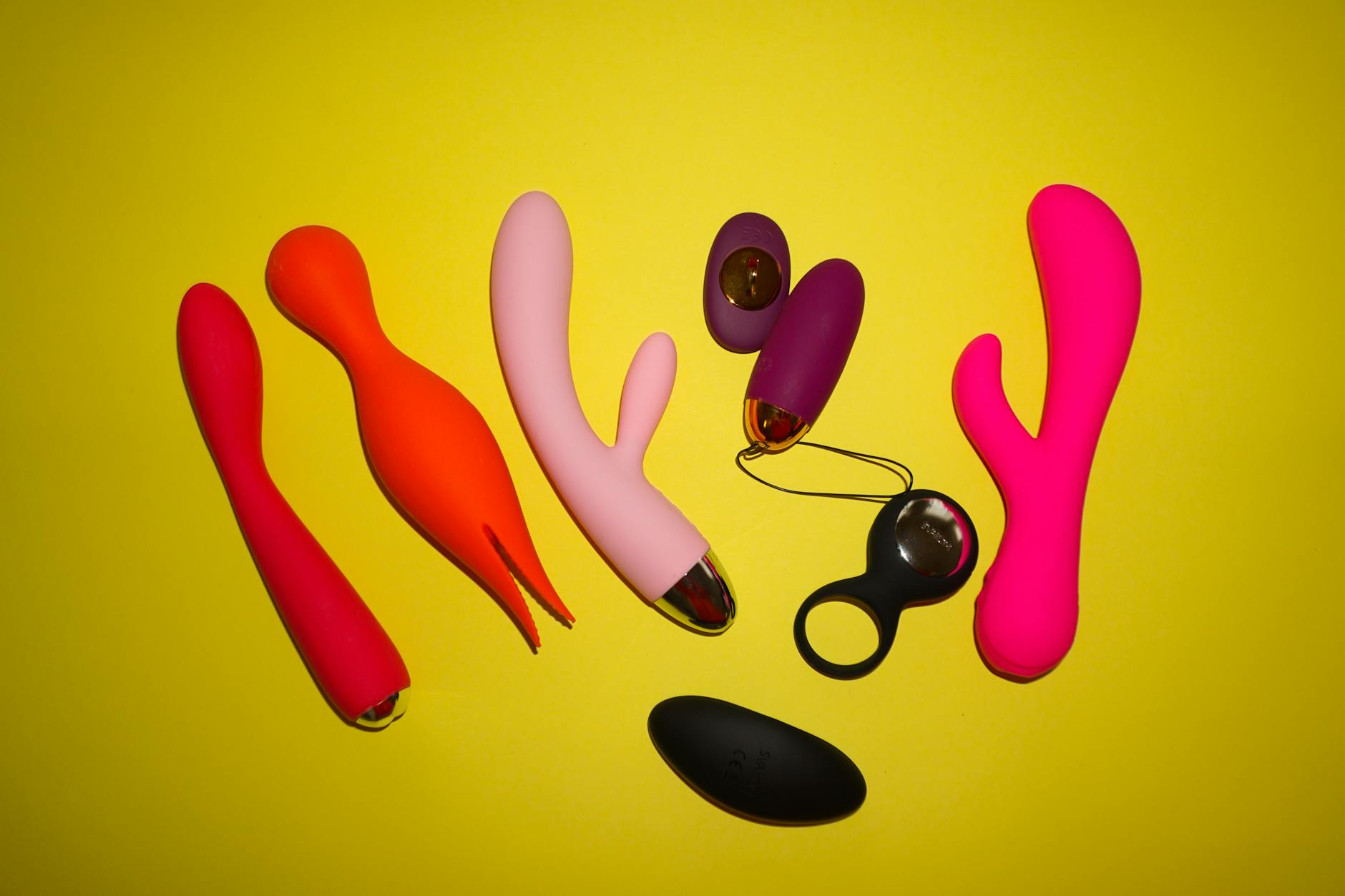
Let's talk about the real scenario
You've been solo for a while. You know your body. You have a lemon clitoral vibrator that works brilliantly for you, and you understand your arousal, your pace, what actually gets you there. Then someone new arrives in your life, and suddenly you're navigating a completely different question: how do you keep your own practice alive while building shared intimacy with someone who has no idea this part of your world exists yet.
It's not awkward because there's anything wrong with using toys. It's awkward because the timing and the conversation feel loaded. Too early feels presumptuous. Too late feels like a secret. This piece walks you through the actual mechanics of holding both at once, without either one cannibalizing the other.
The internal conflict is normal
Here's what usually happens in the first few months with a new partner. You stop using your vibrators because you're in the discovery phase of the relationship. There's novelty, there's attention from someone else, and your solo practice feels less urgent. That makes sense. The problem comes three to six months in, when the initial intensity settles and you suddenly realize you've lost access to your own pleasure baseline.
You feel disconnected from your body. Orgasms are harder to access. Sex with your partner starts to feel like something happening to you rather than something you're genuinely inside of. And at that point, the vibrator feels like it's coming from nowhere, when really it's just you trying to find yourself again.
The move is to keep using your toy while your relationship is new. Not constantly, not instead of partnered time, but regularly enough that your nervous system stays calibrated to your own pleasure. This is not a threat to your new relationship. It's an investment in your capacity to be present in it.
Before you say anything to your partner
First, clarify what you actually want from them. Are you looking for permission? Participation? Just a heads-up? These are three different conversations, and starting with the wrong one creates unnecessary friction.
Permission sounds like: "I want to keep using my vibrator sometimes, and I wanted to tell you first." This frames it as something you're asking consent for, which can feel apologetic and might make your partner defensive.
Participation sounds like: "I use a clitoral vibrator, and I'd like to explore that together at some point." This invites them into the experience, which is great if that's genuinely what you want. But if you're not ready for that yet, don't lead with it.
A heads-up sounds like: "I have a vibrator I use sometimes, and I wanted to mention it so there's no surprise." This is matter-of-fact. You're not asking for anything. You're just keeping the information above the table.
Most people with new partners want the heads-up, which makes sense. It's low-pressure and honest. Start there.
Timing the conversation
Don't do this during sex. Don't do it right after you've been intimate together. Don't do it when either of you is tired, stressed, or rushed.
The best window is when you're genuinely comfortable with each other but still in the realm of normal conversations. That might be three weeks in, or eight weeks in. If you're already sleeping over semi-regularly and he's seen your bedroom, you're in good timing territory.
Bring it up as a casual aside, the way you'd mention any other part of your life that belongs to you. "Hey, so I want to mention something small because I like you and I'm not into hiding things. I use a vibrator sometimes for solo time. I know that's maybe not something we've talked about, so I just wanted you to know it exists." Then stop talking. Let him respond.
Most of the time, you'll get one of three reactions: "Oh cool, I use toys too," or "That's fine with me," or "Can we talk about that more?" All three are workable. The reaction to worry about is silence paired with distance, because that usually means he's spiraling privately. If that happens, come back to it gently the next day. "I felt like my mentioning the vibrator landed weird. What's going on for you?"
How to keep your practice alive while dating
Use your vibrator on a different schedule than your partnered time. If you're seeing each other on weekends, keep your solo practice mid-week. This creates separation, which is actually healthy for your nervous system. You get a clear distinction between self-pleasure and shared intimacy, and neither one bleeds into the other.
Stay in your body during these sessions the same way you do when you're alone. Don't mentally rehearse the conversation you're about to have or worry about whether he'd be okay with this if he knew. That's friction that doesn't belong in your own pleasure. The whole point of keeping this practice is that it's the place where you exist purely for yourself.
If you're feeling self-conscious about using your lemon clitoral vibrator because of the new relationship, that's often a sign that you're not actually ready to mention it yet. That discomfort usually resolves once you talk about it. The secret-keeping is what creates the tension.
When and how to invite your partner in
This is a separate conversation from just telling him it exists. Wait until that first chat has settled and he's demonstrated that he's cool with it. Then, if you actually want to, you can ask whether he'd be interested in that being part of your shared time.
If you do invite him in, start with guidance. Show him what you like. Let him watch you use your toy on yourself first, so he understands the pace, the pressure, the patterns that work for your body. This is not about performing. It's about teaching. Once he's seen how you use it, the conversation about using it together becomes much less abstract.
Some partners will be excited. Some will want to use it on you while you're together. Some will be fine with it existing and prefer not to be directly involved. All of these are totally fine. Your job is not to convince him it's good. Your job is to keep your own access to your pleasure as a non-negotiable part of who you are.
The thing nobody talks about
Sometimes, after you start dating someone, you realize you don't actually want to use your vibrator anymore in the early months. The novelty of partnered sex is enough. Your body's responsiveness is different. And that's okay too. The point is that it's your choice, not an unconscious fade-out because you felt like you had to hide it.
If you get three months in and you genuinely don't miss solo time, that's real data about what works for you right now. If you get three months in and you're desperately wanting your vibrator back but you're scared to use it because you haven't mentioned it, that's a sign the conversation is overdue.
The couples who navigate this best are the ones who treat pleasure toys the same way they treat anything else that matters to them individually. A hobby. A friend. Something you care about that belongs to you. Not a threat to the relationship, and not something that requires permission to exist.
Your lemon vibrator isn't going anywhere. Neither is your capacity for pleasure. The conversation might feel enormous in your head, but most of the time it lands as minor information to a partner who cares about you. And once it's in the air, you get to breathe again in your own body.
FAQ: new partners and vibrators
What if my new partner gets jealous or insecure about my vibrator?
Jealousy usually signals something else. He might worry that you're comparing him unfavorably, or that the vibrator means you're not satisfied with partnered sex. This is a conversation worth having directly. You can say: "This is something I do for myself. It has nothing to do with how I feel about you or what we do together. It's just a tool that helps me understand my own body."
If he continues to be uncomfortable after you've explained it clearly, that's information about his own insecurity and whether he's someone you want to build with long-term. You're not responsible for managing his feelings, but you can be clear and kind while you're at it. If the discomfort is severe or escalates, that's a yellow flag worth paying attention to.
Should I hide my vibrator until we move in together?
No. Hiding it creates an understandable anxiety, and then you're carrying a secret in a new relationship that otherwise feels open. The longer you hide it, the bigger the reveal feels when it comes up. Better to mention it early when it's just a casual detail, rather than three years in when it becomes a whole thing.
Can I ask him to get a vibrator too if he's never used one?
You can mention it, but don't frame it as something he should do to keep up with you. Some people are interested in exploring toys, and some genuinely aren't. That's fine. Your interest in your own pleasure doesn't obligate him to share it, and his disinterest doesn't obligate you to give it up.
What if he wants to use my vibrator and I'm not comfortable sharing it?
That's valid. You can say so directly: "I love that you're interested, and I'd rather keep this one for myself. If you want to explore that together, I'm up for getting something we can both use." Boundaries around your own body and your own tools are healthy. They're not rejections of him. They're just part of how you take care of yourself.
How do I know if using a vibrator solo will affect my ability to orgasm with my partner?
It typically doesn't, as long as you're not using it right before partnered sex. Your body can respond to different types of stimulation. A clitoral vibrator creates a specific type of sensation that's different from what a partner provides. Both can be good. Both can coexist. If you notice your partnered orgasms getting harder after you start using a toy regularly, that's usually a sign to check in with yourself about stress, emotional disconnection, or timing rather than a problem with the toy itself.
If I mention the vibrator too early, will he think I'm not interested in sex with him?
Not if you frame it clearly. You can literally say: "I'm excited about us and I'm also someone who uses a vibrator sometimes for solo time. These things are totally separate." Most partners will get that. And if someone is going to judge you for knowing your own body and having tools that work for you, that's actually useful information about whether he's someone you want to keep dating.
Is it better to mention the vibrator before or after the first time we have sex?
After is usually better. Once you've already been intimate, he has context for understanding that you like partnered sex and also like exploring your own pleasure. If you mention it before you've slept together, there's a risk he'll overthink it or feel like it's a statement about your interest in him. After sex, he's already in the reality that you respond to touch, that you're interested in him, that you're a sexual person. Then the vibrator is just additional information, not a whole new concept.
The bigger picture
Knowing your body, having tools that work for you, maintaining your own pleasure practice as you move through relationships. This is actually what allows you to be fully present with a partner. You're not desperate for them to provide something you don't know how to access yourself. You're not resentful because you've given up a part of your sexuality. You're just a whole person showing up.
The conversation feels large because we've made sexuality private, and revealing any part of it can feel vulnerable. But once you say it out loud, it becomes ordinary information. You have a vibrator. You use it sometimes. It's not a secret. It's just something that's true about you.
If you're looking for guidance on choosing the right vibrator for your sensitivity level before you start using one with a new partner, that might be useful grounding. And if you're dealing with a partner who's skeptical or uncomfortable after the conversation, the piece on navigating skeptical partners walks through that dynamic more specifically.
You deserve pleasure that's yours. You deserve a partner who respects that. And you deserve the conversation to be simple enough that it doesn't weigh on you.
Sources
- Meston, C. M., & Frohlich, P. F. (2000). The neurobiology of sexual function. Archives of General Psychiatry, 57(11), 1012-1030.
- Herbenick, D., et al. (2009). Women who report receiving vibrator-assisted sexual stimulation: findings from a nationally representative study in the United States. Journal of Sexual Medicine, 6(7), 1681-1694.
- Mintz, L. B. (2019). Becoming cliterate: Why orgasms matter and how knowing yourself sexually strengthens your relationship. Harper Wave.
- Gottman, J. M., & Silver, N. (2015). The seven principles for making marriage work: A practical guide from the country's foremost relationship expert. Harmony.