Here's what happens when sex hurts
Pain during sex doesn't just hurt in the moment. It rewires your nervous system. Your body learns to brace, anticipate discomfort, and pull away. Your brain flags the whole experience as a threat. Even after the underlying physical problem is treated, that fear lingers. You know intellectually that it shouldn't hurt anymore. Your body isn't convinced.
This is why rebuilding confidence after painful sex takes more than a diagnosis and a treatment plan. It takes intentional, positive sensation that your nervous system learns to trust again.
Why this matters before partnered sex
If you try to restart partnered sex before you've done solo work, you're bringing all that fear and bracing into the equation. Your partner can't fix it. Reassurance doesn't fix it. Only your own body learning that pleasure is safe again will fix it.
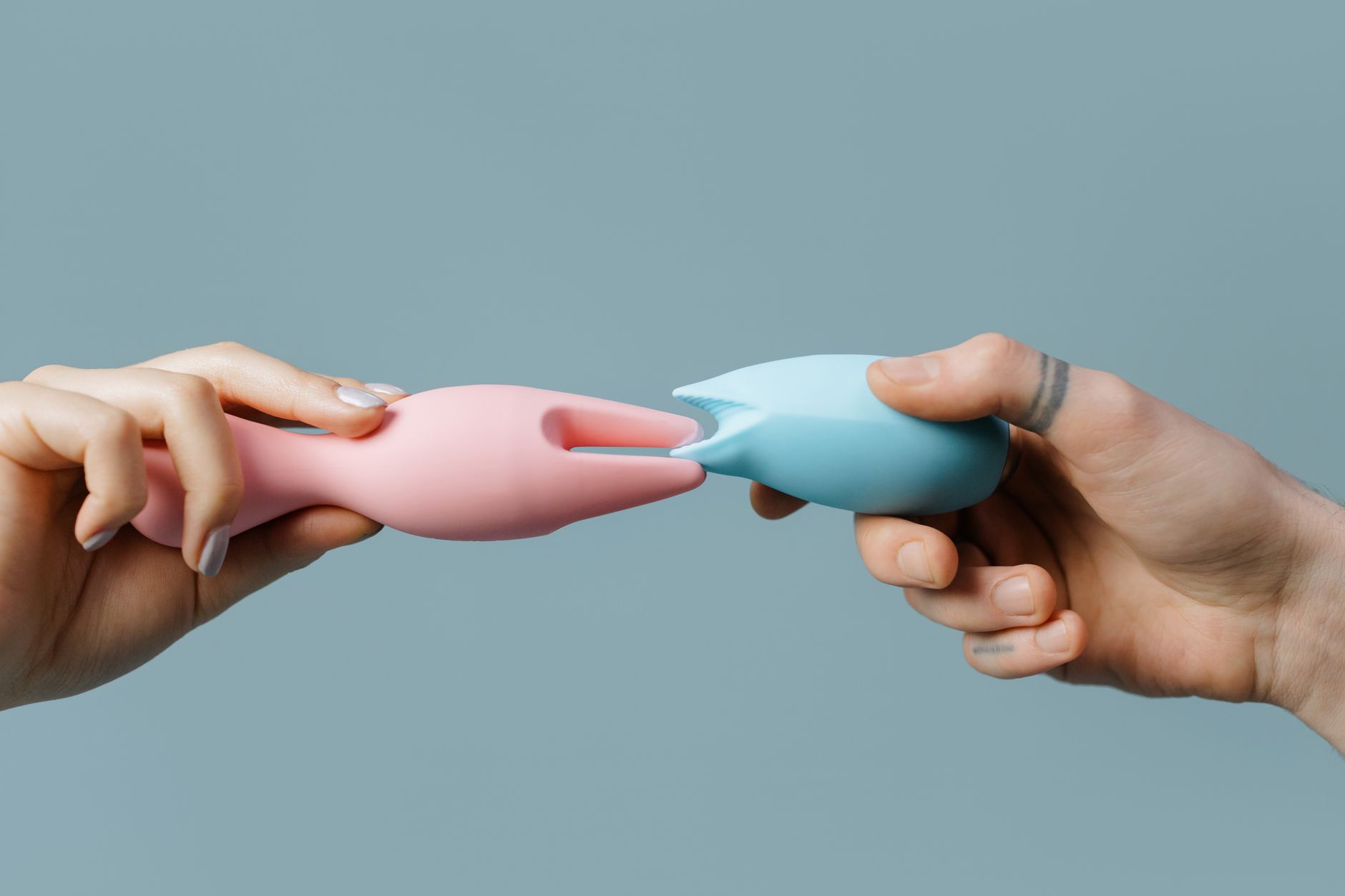
That's where lemon clitoral vibrators come in. They're external, low-pressure, and completely within your control. They teach your nervous system what good sensation feels like without the vulnerability or performance pressure that partnered sex carries.
The nervous system piece (and why it matters)
When you've experienced painful sex, your fight-or-flight response gets triggered around sexual touch. Your pelvic floor tenses. Your breathing shallows. Arousal becomes difficult because your body is literally defending itself.
Using a lemon clitoral vibrator solo is a form of gentle nervous system retraining. Each time you experience pleasure without pain, your brain updates its threat assessment. The vibrations are predictable, the sensation is consistent, and the outcome is positive. This combination is exactly what your nervous system needs to shift from defensive to open.
How to start if you're scared
Honestly, fear is normal here. You've been hurt. Starting slowly isn't a limitation. It's wisdom.
Begin with the lowest vibration setting. The Lem vibrator, for instance, has multiple intensity levels that let you start at barely-there stimulation. You're not trying to orgasm on day one. You're just trying to experience clitoral sensation that doesn't hurt, doesn't scare you, and feels chosen by you.
Start with 3-5 minutes. Some days that's all you'll want. That's completely fine. There's no quota. The goal is consistency and trust, not performance.
Creating the conditions for success
Four things help rebuild confidence faster:
Privacy and time. You need to know you won't be interrupted. Put your phone in another room. Tell your partner (if you have one) that you need uninterrupted time, and set a boundary around that. Your nervous system needs to feel genuinely safe.
No pressure to orgasm. This is critical. If you're using the vibrator thinking "I need to come to prove this works," you're adding performance pressure right back in. The win is sensation without pain. That's it. Orgasm is a bonus, not the goal.
Lubrication. Even if you don't usually need it, use it anyway. Water-based lube is your friend here. It reduces any friction that might trigger fear or discomfort, and it sends a signal to your body that you're taking care of it.
A clear mind. Don't do this while you're anxious about something else, haven't slept, or are thinking about your to-do list. Pick a time when you genuinely have mental space. Your nervous system will relax faster if your brain isn't already wound up.
Weeks one and two
During the first two weeks, the goal is simple exposure and positive sensation. Use your lemon clitoral vibrator 3-4 times a week for 5-10 minutes. Stay on lower settings. You're training your body to associate clitoral stimulation with safety, not pain.
Notice what you notice. Does the sensation feel good? Neutral? Slightly uncomfortable? None of these are wrong. You're gathering data. You're learning what your body actually prefers, separate from what you think you "should" like.
If anything triggers an old fear response, stop. Take a breath. This isn't failure. Your nervous system is telling you it needs more time. Honor that.
Weeks three and four
By now, your nervous system has enough positive data points to start relaxing. You might notice arousal building faster. You might feel less anticipatory tension. You might actually want to explore higher vibration settings.
This is the phase where you can experiment more intentionally. Maybe you try different patterns. Maybe you spend longer than 10 minutes. Maybe you start noticing actual pleasure building instead of just "this doesn't hurt."
Some people reach orgasm during this window. Some don't. Both are completely normal. The nervous system retraining doesn't depend on orgasm. It depends on repeated positive sensation.
When to bring your partner in
Honestly, take at least a month of solo work before reintroducing partnered sex. A month might feel long, but consider it an investment. You're not just healing tissue. You're rewriting neural pathways. That takes time.
When you do loop your partner in, start small. Maybe they just hold you while you use your vibrator. Maybe they use a vibrator with you externally, nowhere near the area that hurt before. The goal is showing your nervous system that partnered touch can be safe too, gradually, in a way you control.
Talk to your partner about what you've learned from solo exploration. What settings do you like? What speed? Do you prefer rhythm or steady vibration? This information is gold because it removes guesswork from partnered sex.
What to do if you're not progressing
If you're three weeks in and still feeling significant fear, talk to your healthcare provider. Sometimes pain during sex has ongoing physical causes. endometriosis, vaginismus, vestibulitis, hormonal shifts. A pelvic health physical therapist can help with many of these. A good one understands that the psychological component is just as important as the physical one.
Using a clitoral vibrator as part of that treatment often accelerates healing because it gives you a tool for positive reinforcement between appointments.
The confidence piece
What changes over these weeks isn't just sensation. It's your relationship to your own body. You're proving to yourself that pleasure is possible for you. That your body can feel good. That you have agency over what happens to it. That matters way more than any specific outcome.
That's what rebuilds confidence. Not forcing yourself back into partnered sex before you're ready. Not white-knuckling through pain to prove something. But deliberately, gently reclaiming pleasure on your own terms, with a tool that puts you fully in control. That's how you move forward.
FAQs
How long does it take to rebuild confidence after painful sex?
Every person's timeline is different, but most people see meaningful shifts in 4-8 weeks of consistent solo exploration. Some people feel safe with partnered touch in that window. Others need longer. The timeline isn't about speed. It's about your nervous system genuinely updating its threat assessment. That can't be rushed, and trying to rush it usually backfires.
Can I use a lemon clitoral vibrator if I have vaginismus?
Yes, but with care. Vaginismus involves involuntary pelvic floor clenching, often triggered by fear or anticipation of pain. Solo work with a clitoral vibrator is actually ideal because it's non-penetrative and fully external. You're retraining your nervous system without the specific trigger that usually activates vaginismus. That said, if you have vaginismus, working with a pelvic physical therapist alongside solo exploration accelerates progress significantly.
What if I can't orgasm during solo exploration?
Orgasm is not the measure of success here. Your win is sensation without fear. Your win is your nervous system relaxing. Your win is discovering that pleasure is possible for you. Many people don't orgasm during early solo work and that's completely normal. The orgasms often come later, once the nervous system has genuinely settled. Focus on the process, not the outcome.
Should I tell my partner I'm doing this?
That depends on your relationship and communication style. Some couples benefit from transparency. Others prefer privacy during recovery. If you do tell them, frame it as healing work, not rejection. "I'm doing some solo exploration to rebuild confidence after what happened. This is about me learning what feels safe again." Most partners understand that.
Is it normal to feel vulnerable or emotional during solo play after painful sex?
Absolutely. You're touching the area that hurt you. You're confronting fear. You're asking your body to trust again. Emotions often come up. If you cry or feel intense feelings during or after, that's your nervous system processing. It's not a sign something is wrong. It's a sign something is healing. Be gentle with yourself afterward.
How do I know when I'm ready for partnered sex again?
You're ready when: solo pleasure no longer triggers fear or anticipatory tension, you can experience at least light arousal with a vibrator, you genuinely want to try partnered touch (not just feel like you "should," and you and your partner have talked clearly about pacing and boundaries. Even then, start slowly. External touch only. No penetration for at least a few encounters. Your nervous system will tell you when it's ready to expand further.
You're not starting from zero
Rebuild doesn't mean you're broken. It means you're choosing to reclaim something that was taken from you. That's brave. The lemon clitoral vibrators at Nancy Lemon are built for this work because they put total control in your hands. Low settings for nervous system retraining. Consistent sensation for rebuilding trust. Predictability when your body has learned to expect the worst. That's the whole point.
If you have questions about how to get started or want guidance on your specific situation, reach out to our team. You don't have to figure this out alone.