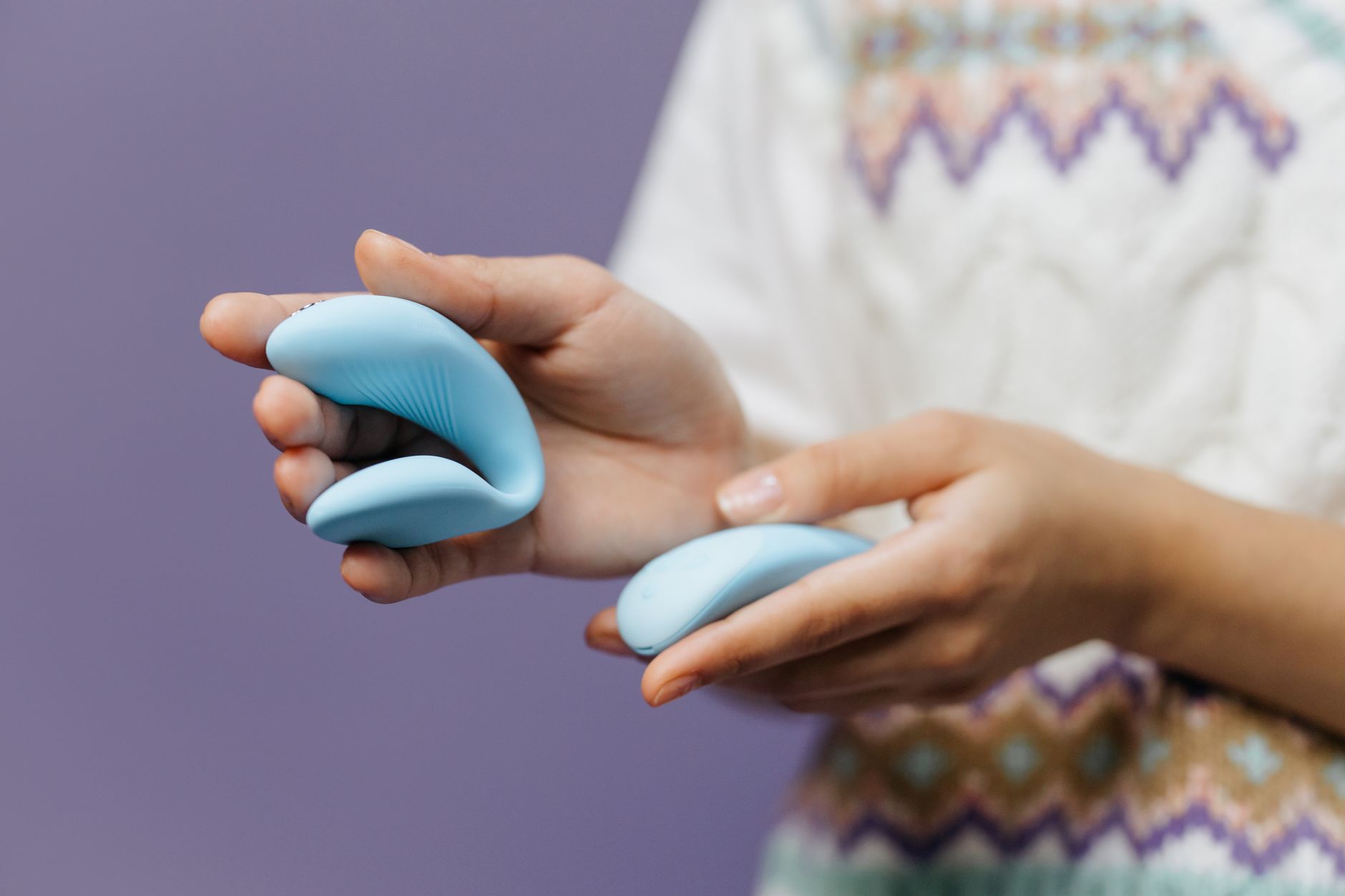
Let's be real about what changes when you stop focusing on penetration
Here's the thing. Most couples think non-penetrative sex is a consolation prize. A workaround. Something you do when penetration isn't available or when one partner's body needs a break. But that framing gets it backwards. Non-penetrative pleasure with a lemon clitoral vibrator often becomes the deepest, most connected thing a couple can do together. That's not poetry. That's clinical observation from decades of couples work.
The shift happens when you stop thinking of pleasure as a destination and start treating it as conversation. A lemon vibrator becomes the translator.
Why couples avoid this conversation in the first place
There are three things I hear repeatedly from partners who've never introduced a toy together.
First: "I'm worried she'll think I'm not enough." Second: "I don't want to seem demanding or weird." Third: "I genuinely don't know how to bring it up without it feeling awkward at dinner."
All three beliefs are rooted in the same misconception. You think introducing a lemon vibrator is a statement about your partner or your relationship. It's not. It's a tool for exploration. Nothing more.
When you can separate the toy from the emotions you're projecting onto it, the conversation becomes much simpler. You're not saying "I want more." You're saying "I want us to experience this together." Those are wildly different requests.
The conversation starter that actually works
Don't ask during sex. Don't ask during an argument. Ask when you're both calm, clothed, and in a space where either of you can leave if it feels uncomfortable.
Start like this: "I've been thinking about ways we can explore pleasure together without focusing on penetration. I found something that interests me, and I'd like to try it with you. But only if you want to. No pressure either way."
Then show them. Not in a clinical way. Show them the lemon clitoral vibrator. Let them hold it. Ask what they think. Listen to the actual words they say, not the version you're nervous they might say.
Most partners respond with curiosity when there's zero pressure. Some need time to think. Both are fine. The point is you've named the thing and made space for honesty.
How to actually introduce a lemon vibrator into partnered play
Here are the mechanics, because that matters too.
Start with exploration, not performance. Your first time using a lemon vibrator together should not be about reaching orgasm. It should be about discovering sensation. One partner holds the vibrator. The other guides it, communicates, and notices what feels good. No goal. No timeline.
Establish a signal system. Because you're introducing a new element, nonverbal communication becomes even more important. "Slow down" can be as simple as a squeeze on the hand. "More here" can be a gentle push. Some couples use traffic light language: green means yes, yellow means slow down, red means stop. Whatever works for you both.
Take turns holding the device. Lemon vibrators work best when one person controls the pressure and pattern while the other person focuses entirely on sensation. But after a few sessions, switch roles. The person doing the controlling learns a lot about their partner's responses. The person receiving learns about their own body.
Go slower than you think you need to. Most people apply too much pressure too fast. Start at pattern one on your lemon vibrator. Most partners say "go higher" if they want it. Very few say it. Stay low. Let sensation build. Orgasm isn't the finish line here. Connection is.
The emotional layers that happen beneath the physical part
When you're using a clitoral vibrator with a partner for the first time, something shifts in the nervous system. You're being fully witnessed. You're being fully present. There's no performance, because both of you already know this isn't about looking good. It's about feeling real.
I've had couples tell me that non-penetrative play with a lemon vibrator felt more intimate than anything they'd done before. Not because the sensation was better. Because the presence was different.
You can't truly multitask while one partner is exploring with a vibrator. You can't think about the dishes or your work email or what you look like. The nervous system has nowhere to go but into the moment.
That's why this matters beyond the sexual part. Couples who can maintain that kind of presence together tend to handle conflict better, communicate more clearly, and feel more secure in their relationship overall.
What happens if one partner feels uncomfortable
Listen without defensiveness. "This doesn't feel right for me" is complete information. It's not a rejection of you. It's data about what their body or nervous system needs right now.
Most of the time, discomfort isn't about the toy. It's about timing, pacing, or something deeper that needs to be named first. Maybe your partner needs to feel more emotionally connected before adding a new element. Maybe they're processing shame or trauma that's unrelated to you or the vibrator. Maybe they're just not ready yet.
None of those things mean "never." They just mean "not now, not this way." You can ask: "What would need to feel different for this to feel okay?" That question opens a real conversation instead of shutting one down.
How lemon vibrators deepen the "good" kind of vulnerability
Introducing a clitoral vibrator into partnered play requires a specific type of vulnerability. You're asking: "Can you see me wanting pleasure? Can you help me access it? Can you stay present while I do?"
Those are the questions that build lasting intimacy.
When your partner can hold space for your pleasure without needing it to be about them, something releases. You stop performing for them. You start trusting them. You stop managing their emotions and start focusing on actual connection.
That foundation then transfers into other parts of your relationship. You argue more fairly. You ask for what you actually want instead of hinting. You show up more honestly in all contexts.
Common friction points and how to move through them
"She seems uncomfortable but she's not saying anything." Ask directly. "Do you want to keep going or should we pause?" Silence is not consent. Neither is "yeah, it's fine." You want "yes, I want this."
"I feel like I'm doing something wrong because they're not orgasming." Your job is presence, not results. Orgasm sometimes happens. Sometimes it doesn't. Both are okay. If you're focused on the outcome, neither of you is actually present.
"We tried this once and it felt awkward and we never mentioned it again." One awkward session doesn't define the experience. You were both learning. Try again. It gets easier.
"My partner wants to use the lemon vibrator but I'm worried I'll be replaced." You won't. A vibrator does one thing: it provides consistent sensation. It can't kiss you, hold you, look at you, or care about you. Your job is to stay present while your partner explores their own pleasure. That actually deepens your role, not diminishes it.
The long-term shift that happens
Couples who integrate lemon vibrators and non-penetrative play into their intimacy tend to report higher satisfaction across the board. Not because the sex is mechanically better. Because they've built a container of trust around pleasure.
You've named the thing that usually stays unspoken. You've asked for what you want. You've received. You've witnessed. You've stayed present through something vulnerable.
That's the work. And it's worth it.
People also ask
How do you introduce a lemon clitoral vibrator to a partner who's never used toys before?
Start the conversation outside the bedroom, when you're both calm and there's no pressure. Show them the device. Explain why you're interested. Listen to their response without trying to convince them. If they're curious, you can explore together at their pace. If they're not ready, that's information too. Respect the timeline. You can revisit the conversation in a few months.
Can you use a lemon vibrator together if your partner isn't interested in penetration?
Absolutely. Non-penetrative play is often the most intimate type of partnered pleasure. A lemon clitoral vibrator is specifically designed for external stimulation, which means both partners can focus entirely on sensation and presence without the logistics of penetration. It's actually an ideal tool for couples exploring non-penetrative intimacy.
What if using a lemon vibrator together feels awkward the first time?
An awkward first time is completely normal. You're both learning. You're both being vulnerable. You're both outside your usual script. That awkwardness typically dissolves after two or three sessions once you've moved past the novelty and into actual presence. If the awkwardness persists, talk about what's making it uncomfortable. Usually it's about timing, pressure level, or an unspoken expectation that needs to be named.
How do you maintain emotional intimacy when using a lemon vibrator with your partner?
Stay present. Make eye contact. Touch each other. Talk about what you're noticing. Check in verbally. Don't treat it like a performance where one person is doing something to the other. Treat it like exploration where you're both discovering something together. The emotional connection comes from presence, not from the vibrator itself.
Is it normal to feel insecure if your partner wants to use a lemon vibrator together?
Yes. Insecurity comes up because pleasure has been framed as something you should provide alone. That's not true. Pleasure is expansive. A vibrator isn't a replacement. It's an expansion of what's possible together. The insecurity often dissolves when you shift from thinking "they need this because I'm not enough" to "we can explore this together and it brings us closer."
What's the best way to talk about frequency when introducing non-penetrative play with a lemon vibrator?
Don't assume anything. After your first experience, ask: "What did that feel like for you? Do you want to do this again?" Let them answer. Some couples want to integrate it regularly. Others prefer it occasionally. Some prefer it as a primary form of intimacy. There's no right answer. The only thing that matters is that both of you are saying yes to the frequency.
Final word
Non-penetrative play with a lemon vibrator isn't a workaround. It's an invitation to deeper presence with your partner. You're building trust. You're learning how to ask for what you want. You're practicing showing up for someone else's pleasure without needing it to be about you.
That's the work of real intimacy. And it starts with one honest conversation.