
Let's talk about sensitivity without shame
Here's what nobody says clearly: sensitivity isn't a flaw. It's information. Your clitoris might feel unbearably intense to direct vibration, but that doesn't mean you can't have powerful, full-bodied orgasms. It means you need a different tool and a different strategy. That's where lemon vibrators come in.
Most people with sensitive clitorises have been told two unhelpful things. One: "You're too sensitive, so you'll never enjoy toys." Two: "Just get used to it; your sensitivity will fade." Both are wrong. What's actually happening is that traditional vibrators deliver stimulation in a way that overwhelms your nerve endings instead of awakening them.
Why standard vibrators feel like too much
Direct vibration on a sensitive clitoris creates a numbing, almost electric sensation because the stimulation is uniform and relentless. It's like holding your hand under a faucet on full blast. Your body can't integrate the input, so your nervous system shuts down instead of ramping up. You feel overwhelmed, not aroused.
Lemon suction-based clitoral vibrators work differently. Instead of vibrating against tissue, they use gentle suction and release cycles that mimic oral stimulation. This pattern allows your nervous system to anticipate and respond rather than brace and numb. The result: you can build intensity gradually, and the orgasm that follows often feels deeper because your whole system had time to engage.
How to start if you're nervous about sensation
Three rules for your first session:
Use the lowest setting. The Lem vibrator has multiple intensity levels. Start at level 1, even if you think it won't be enough. You're not testing whether it works; you're teaching your body that it's safe. Intensity matters far less than consistency and patience.
Build a buffer. Never put a lemon clitoral vibrator directly against your clitoris, even on the lowest setting. Wear underwear or place a thin cotton cloth between your body and the toy. This softens the suction just enough that your nervous system doesn't interpret it as threat. After 3-5 minutes, you can remove the barrier.
Set a timer for ten minutes maximum. The goal isn't to come. It's to get comfortable with the sensation. Your brain needs to learn that this tool is different from others you've tried. Ten minutes of calm exploration is infinitely more valuable than thirty minutes of tensing against intensity.
Building tolerance and intensity at the same time
One of the smartest things about lemon vibrators for sensitive people is that you can't force them. You have to negotiate with your body. That negotiation is where the deeper orgasms come from.
After your buffer sessions, start introducing movement. Instead of holding the Lem stationary, try gentle circles around the clitoris (not directly on it). This spreads the sensation and lets you control where the intensity lands. You might find that the left side of your clitoris likes something different than the right side. Good. That's what you're learning.
Program your arousal like a small climb instead of a sprint. Week one, level 1 with a buffer. Week two, level 1 without a buffer. Week three, level 2 with patience between intensities. You're not being slow. You're being strategic. The people who get to the most intense, full-body orgasms are almost always the ones who stopped rushing.
A particular win for sensitivity: try the Lem on the outer vulva first. Your labia have different nerve density than your clitoris, and they often enjoy intensity that would overwhelm the bud itself. Spend five minutes there, building arousal broadly, then move to the clitoris when you're already warm and wanting.
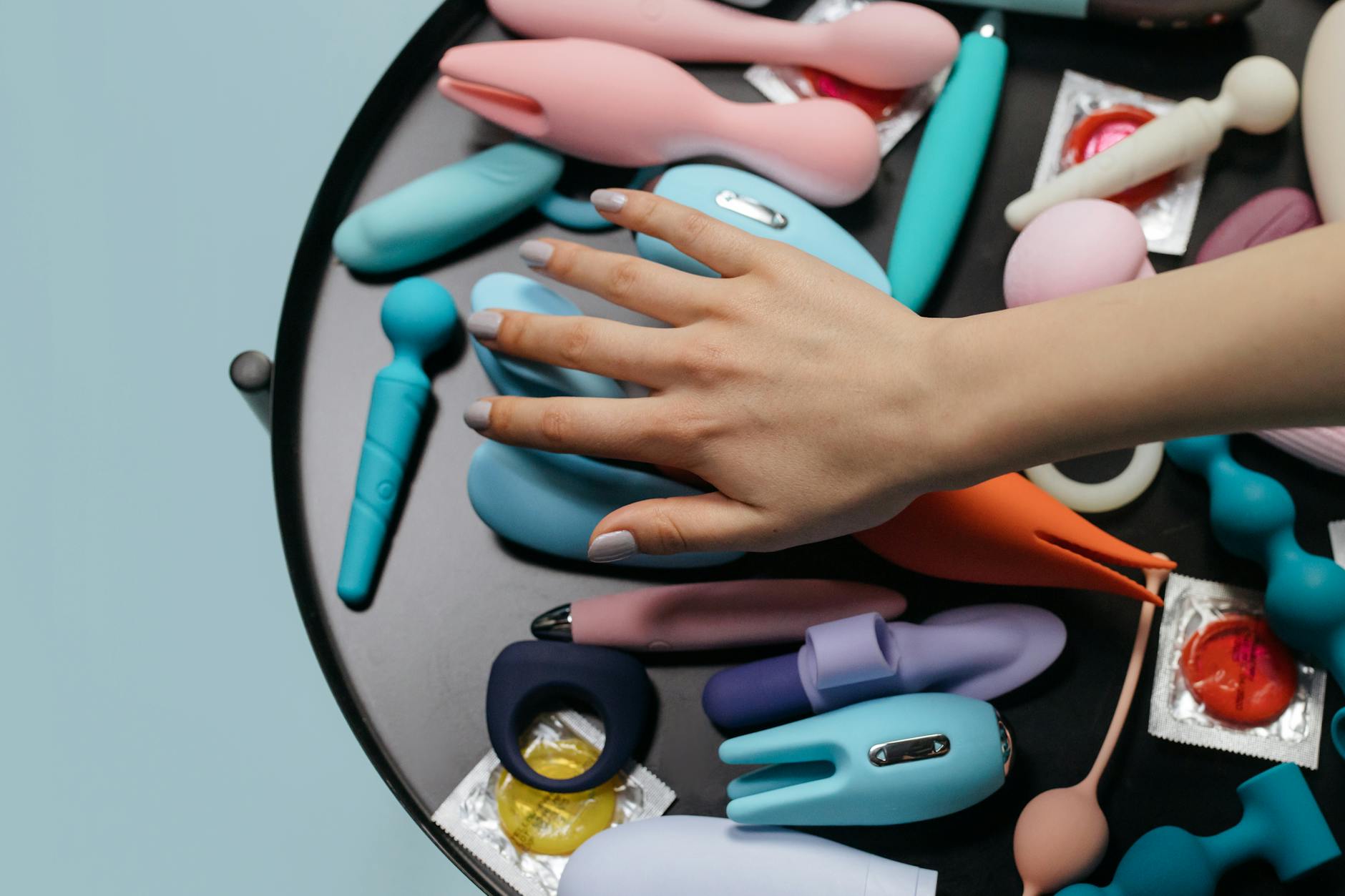
Photo by cottonbro studio on Pexels
The mental game when your body feels like it's lying to you
Sensitivity often comes with a frustration story. "Everyone else can just use a vibrator. Why can't I?" That comparison will poison the whole experience. Let go of it now.
Your sensitivity is not a defect. It's a feature. It means your nervous system is responsive. That same responsiveness that makes you feel overwhelmed by a standard vibrator is what's going to give you orgasms that feel like they move through your whole body instead of just your genitals.
When you feel that familiar overwhelm starting, pause. Don't power through. Sensitivity that you ignore will harden into numbness, and then you're actually stuck. Sensitivity that you listen to becomes nuance, and nuance is how you access the deeper stuff.
The partner component matters here too. If you're using a lemon vibrator with someone else in the room, they need to know that what looks like "not enough" is actually "exactly right." You're not struggling. You're communicating. The pacing and the patience are the whole point.
When lube, warmth, and timing matter
Three non-negotiable factors for sensitive people:
Lubrication. Even if you're naturally wet, add lube. Silicone-based works beautifully with lemon vibrators (they're made of silicone, so they won't degrade each other). Lube doesn't mean you're not aroused. It means you're removing friction as a variable so sensation can be pure and clear.
Body temperature. You orgasm harder when you're genuinely warm, not just aroused. Take a hot shower first. The heat relaxes your pelvic floor and tells your nervous system it's safe to open. Cold or tense bodies create numbness even with the best tools.
Time in your cycle. If you menstruate, your clitoral sensitivity changes across your cycle. Just before your period, you're often less sensitive (tissues are more engorged). Mid-cycle, around ovulation, you're often more reactive. Track when the Lem feels best and notice the pattern. You're not broken; you're cyclical.
Why intensity doesn't equal depth
Here's the thing that changes everything: the deepest orgasms don't come from the most intense stimulation. They come from the most integrated stimulation. That's the difference.
Intensity is a volume dial. Depth is about how much of your nervous system is engaged. You can have a technically intense orgasm that feels small and disconnected. You can have a moderate-intensity orgasm that ripples through your whole body because you were present, your pelvic floor was relaxed, and your arousal was genuinely built rather than forced.
Lemon clitoral vibrators excel at this because their rhythm invites integration instead of demanding numbness. You're not bracing against the sensation. You're meeting it. That meeting is where depth lives.
What to do if you plateau
You'll hit a point where level 3 feels about the same as level 2. This isn't a sign that lemon vibrators aren't working. It's a sign that you've acclimated, which is normal and healthy. Your nervous system is adapting.
Instead of cranking up to level 4, try changing the pattern. Most lemon vibrators have pulse modes or rhythm variations beyond just intensity levels. Explore those. Your body hasn't plateaued; it's just ready for a different angle.
You might also try varying the location. The area just above the clitoris (your clitoral hood) might feel fresher than the bud itself right now. The space between your clitoris and vagina might surprise you. The Lem's shape makes it easy to move around and find new sensitive zones. You're not running out of sensation. You're discovering terrain.

Photo by cottonbro studio on Pexels
Bringing a partner into sensitive territory
If you want to use a lemon vibrator with a partner, establish consent language first. That means specifically: "I want to explore this slowly. That doesn't mean it's not working. It means I'm being smart." A partner who understands that pacing isn't hesitation will actually create more arousal because you won't be defensive.
Let them watch first without touching anything. Your partner seeing you respond to the Lem, even quietly, builds their confidence that you're into it. Then, if you want, they can hold it while you guide them on speed and location. This creates a intimacy loop where they learn your body and you learn to trust while someone else is in control.
One more thing: sensitive people often feel pressure to prove they're enjoying themselves. You don't have to perform. Your partner's job is to notice the small signs: your breathing deepening, your hips tilting slightly, a long exhale. Those are the real signals, not dramatic moaning.
People also ask
Can lemon vibrators actually feel different on sensitive clitorises compared to other toys?
Yes. The suction mechanism is fundamentally different from vibration. Vibration overwhelms sensitivity. Suction engages it. If you've only tried buzzy vibrators and they felt unbearable, you've actually only tested one category of stimulation. Lemon clitoral vibrators work on a completely different principle, which is why many sensitive people find them approachable where other tools felt impossible.
How long does it take to build up to stronger orgasms with lemon vibrators when you're sensitive?
It varies, but most people see a shift within 2-3 weeks of regular use. That's not because your clitoris has "toughened up." It's because your nervous system has learned that this stimulation is safe and pleasurable. Your brain stops bracing and starts opening. Some people feel deeper orgasms within the first month. Others take 6-8 weeks. The timeline isn't about your sensitivity being wrong. It's just your individual pace.
Should I use a lemon vibrator if I also have vaginismus or pelvic tension?
Lemon vibrators are often gentler than other options, so they're worth trying. But pair them with pelvic floor awareness work. You might find that using the vibrator while doing gentle breathing (inhale for 4, exhale for 6) helps you relax. If you have active pain with any stimulation, talk to a pelvic floor physical therapist before introducing a toy. The vibrator can be part of recovery, but it shouldn't be the only tool.
What if I feel numb after using a lemon vibrator for a while?
That's often a sign you've been holding tension or you pushed intensity too fast. Stop, take a 20-minute break, and come back when you're genuinely aroused again. Numbness isn't a character flaw. It's your nervous system saying "I need a reset." Some people also find that alternating between a lemon vibrator and manual stimulation (your hand or a partner's hand) keeps sensation fresher longer.
Can sensitivity change with hormones or medications?
Absolutely. Birth control, antidepressants, antihistamines, and other medications can shift clitoral sensitivity. If you suddenly feel numb where you used to feel a lot, or hypersensitive where you felt normal, don't assume your toy broke or your body changed permanently. Sometimes it's situational, sometimes it's medication-related. Talk to your doctor if the change is drastic or distressing. In the meantime, a lemon vibrator's adjustable intensity levels let you work with your current baseline rather than fighting it.
Is it normal to orgasm differently with a lemon vibrator than with a partner or manual stimulation?
Completely normal. The pattern of stimulation is different, so the orgasm will feel different. You might find that the Lem gives you longer, rolling orgasms while manual feels more peaked. Neither is better. They're just different pathways to pleasure. Your body is capable of both, and exploring the variety actually makes both feel richer over time.
The deeper pleasure is waiting
Sensitivity stops being a problem the moment you stop treating it like one. Your clitoris isn't asking you to push harder. It's asking you to listen better. A lemon vibrator is a tool that actually respects that request instead of overriding it.
Start slow. Be patient. Notice what your body is telling you. The deeper orgasms, the ones that feel like they move through your whole being, aren't on the other side of forcing through sensitivity. They're on the other side of making friends with it. You're closer than you think.
Want to explore more about building pleasure gradually? Read about how to use lemon vibrators when arousal takes longer with a partner or get practical guidance on why lemon vibrators feel different than other clitoral vibrators. And if you have more questions, reach out.