Let's name what's actually happening
Your partner isn't interested in toys yet. Maybe they never will be. That's their boundary, and it's valid. But here's what's also true: your desire for pleasure is valid too. The problem isn't that you want different things. The problem is that most couples never learn how to want different things without one person feeling rejected or the other feeling pressured.
I work with couples on this constantly. The conversation usually starts with shame. "I feel like a freak for wanting this." Or resentment. "Why won't they just try?" Both emotions are signals that the real conversation hasn't happened yet.
Let me show you how to have it.
Solo exploration as a foundation, not a secret
Here's what doesn't work: hiding your lemon vibrator in a drawer and using it when your partner's asleep, then pretending you're fine with less pleasure than you actually want. That path leads to quiet resentment that poisons intimacy over years.
Here's what does work: exploring solo deliberately, with full permission from yourself and honesty with your partner about what you're doing. This is not sneaking around. This is claiming your own pleasure.
Start by using your lemon clitoral vibrator alone, without your partner involved. Learn your own body. Understand what patterns work for you, what intensity feels right, how long sessions usually last. This matters because it separates two things that usually get tangled: your pleasure from toys, and your pleasure with your partner. You get to have both independently.
The conversation that changes everything
Before you bring toys into shared space, you need one honest conversation. Not during sex. Not in bed. Sit down somewhere neutral, when you're both calm, and say something like:
"I've been thinking about pleasure and what I want. Using a toy solo matters to me. I want to explore that. I'm not asking you to use it with me right now. I'm telling you what I'm going to do, and I want you to understand why it matters."
Then be specific about why. "It helps me feel more connected to my body." Or "I want to understand my own pleasure better." Or "I get to experience something I've been curious about." Not "because you're not enough." Not "because you're not doing it right."
Your partner might say no. They might say yes but feel uncomfortable. They might come around later. All three are real possibilities, and none of them mean you stop wanting what you want.
Why partners resist, and what it usually means
Listen, resistance to toys usually isn't about the toy. It's about something underneath. Common ones:
Insecurity. "If you use a vibrator, you don't need me." This is almost never rational, but it's almost always the feeling. Naming it directly helps. "Using a toy doesn't mean I want you less. It means I want to explore my own pleasure. Those are different things."
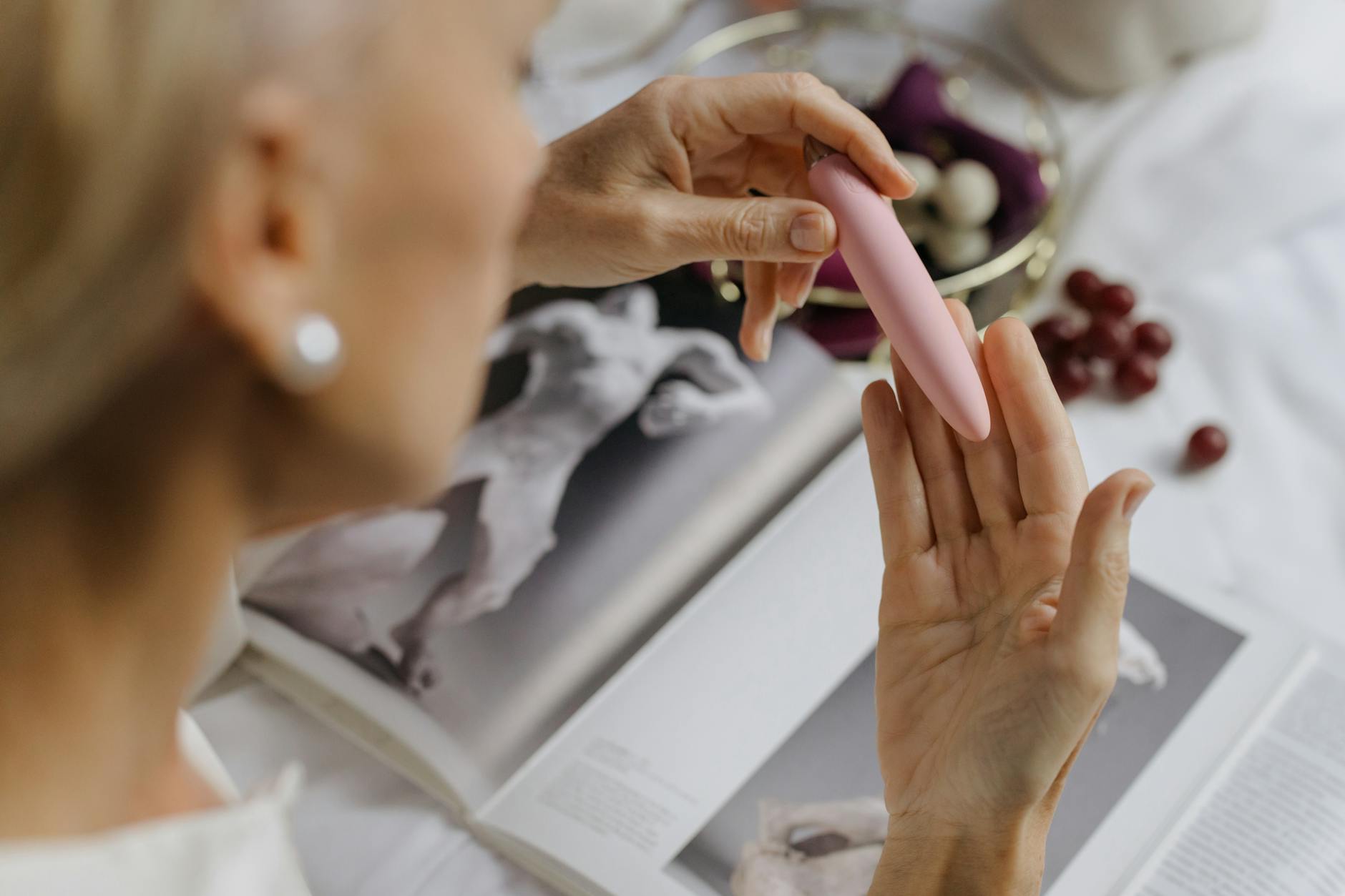
Unfamiliarity. They've never seen a toy. They don't know what one does. They're imagining something weirder than reality. Show them your lemon vibrator. Let them hold it. Explain how it works. Demystification is powerful.
Shame or religious background. Some people grew up thinking toys were wrong. That shame doesn't disappear because they fell in love with someone who wants one. Be patient. You're not changing their values; you're just asking them to make space for yours.
Fear of change. Sex with a partner is familiar. Adding a toy changes the dynamic. That's scary, even if it's also interesting.
None of these mean you should stop wanting what you want. They just mean the conversation takes longer and requires more compassion than you might expect.
Using your toy solo, openly
Once you've had the conversation (or made the decision to proceed anyway, which is also legitimate), use your lemon vibrator without secrecy. Not to punish your partner or prove a point. Just to have the experience.
Set aside time when you have privacy. Maybe that's a night they're out, or early morning before they wake up, or a locked bathroom. The logistics don't matter much. What matters is that it's intentional, not furtive.
Start with lower intensity settings on your lemon clitoral vibrator if you're new to toys. Let yourself get curious. Notice what feels good. Notice what doesn't. Orgasm isn't the goal here; pleasure and familiarity are.
After, you can choose what to share. You don't owe your partner a play-by-play. You also don't need to hide it. "I used my toy today" is a complete sentence if you want it to be.
The slow bridge to shared space
Sometimes, after weeks or months of solo exploration, a partner becomes curious. "What's that like?" Or they ask to watch. Or they want to be in the room while you use it, even if they're not touching you.
These are openings. Don't push them. If your partner wants to watch you use your lemon vibrator, let them. Don't perform for them. Just do what you normally do, and let them see it.
If they ask questions afterward, answer them. If they ask to touch it, you decide. If they want to try holding it, or seeing how it feels on their own body, you get to say yes or no. Your pleasure is still yours.
Some partners never get comfortable with toys. And if that's a real mismatch in what you both need, that's a deeper conversation about compatibility. But most of the time, resistance softens when toys are no longer secret or shameful. They're just something you do, like masturbation, like taking a bath, like any other form of self-care.
Managing your own feelings while they adjust
Let's be honest: it can sting when your partner isn't interested in something that matters to you. You might feel rejected. You might wonder if you're broken for wanting it. You're not.
Your desire for pleasure, including pleasure from toys, is normal and healthy. Their reluctance is also normal and usually temporary. But your job isn't to convince them. Your job is to know what you want and honor it, even if they're not ready yet.
That might mean using your lemon clitoral vibrator solo indefinitely. And that's okay. Solo pleasure is real pleasure. It's not second-best. It's not a substitute for partnered sex. It's its own thing, and it deserves your time and attention.
When the conversation goes sideways
Sometimes you tell your partner you want to use toys and they respond with anger, shame, or controlling behavior. "I won't be with someone who uses that." Or "You're disgusting." That's not a boundary; that's an attack. And it's worth taking seriously.
A boundary is: "I'm not ready to use toys with you." An attack is: "You can't use toys." One preserves your autonomy; the other tries to erase it.
If your partner is using your pleasure as a weapon or a shame trigger, that's a sign the relationship needs support. Consider talking to a therapist together. Not to convince them toys are fine. But to understand why your autonomy feels threatening to them, and whether that's something you can both work with.
The long game
Most couples who struggle with toy resistance eventually find their way. It doesn't always mean partnered use. It often just means quiet acceptance: you have your pleasure, they have theirs, and there's room for both in the relationship.
Your lemon vibrator isn't a threat to your relationship. Shame about it, secrecy around it, or pressure to hide it. Those are the threats. So use your toy, own it, and give your partner time to adjust. Most of the time, they will.
People also ask
Is it normal to want to use a vibrator if my partner isn't interested?
Completely normal. Desire for toys is independent of your feelings about your partner. You can love someone deeply and still want to explore solo pleasure. One doesn't diminish the other. Thousands of people in happy relationships use vibrators regularly while their partners have zero interest, and the relationship thrives.
Will my partner feel threatened if I use a lemon vibrator without them?
Possibly, at first. That's often about insecurity or unfamiliarity, not about you doing anything wrong. If you approach it with honesty instead of secrecy, and you're clear that it's about your pleasure, not about replacing them, most partners adjust over time. Transparency matters more than agreement.
Should I ask permission to use a toy, or just do it?
There's a middle ground. You don't need permission to use your own body. You do owe your partner honesty, especially if you share a home or bedroom. Something like: "I want to explore pleasure with a toy. I'm going to do that. I wanted you to know." That's not asking permission; it's giving them information with respect.
What if my partner says they'll leave me if I use a toy?
That's a serious threat, and it's worth taking to a couples therapist. A partner who tries to control your body autonomy by threatening abandonment is using coercion. You deserve to explore your own pleasure. If they truly can't accept that, that's a compatibility issue bigger than toys. Get support.
Can I ever convince my partner to be okay with toys?
You can't convince anyone to want something they don't want. What you can do is stop hiding it, stay calm, answer their questions, and give them time. Many partners become curious or accepting when toys are no longer mysterious or shameful. But your job isn't to convince them. Your job is to live authentically, even if they're not ready yet.
What if I'm worried they'll find my toy and get angry?
If you genuinely fear your partner's anger over your toy, that's a relationship red flag worth examining. You shouldn't have to hide your own pleasure or fear their reaction to your body and choices. Consider talking to a therapist individually about whether this relationship feels safe to you overall.