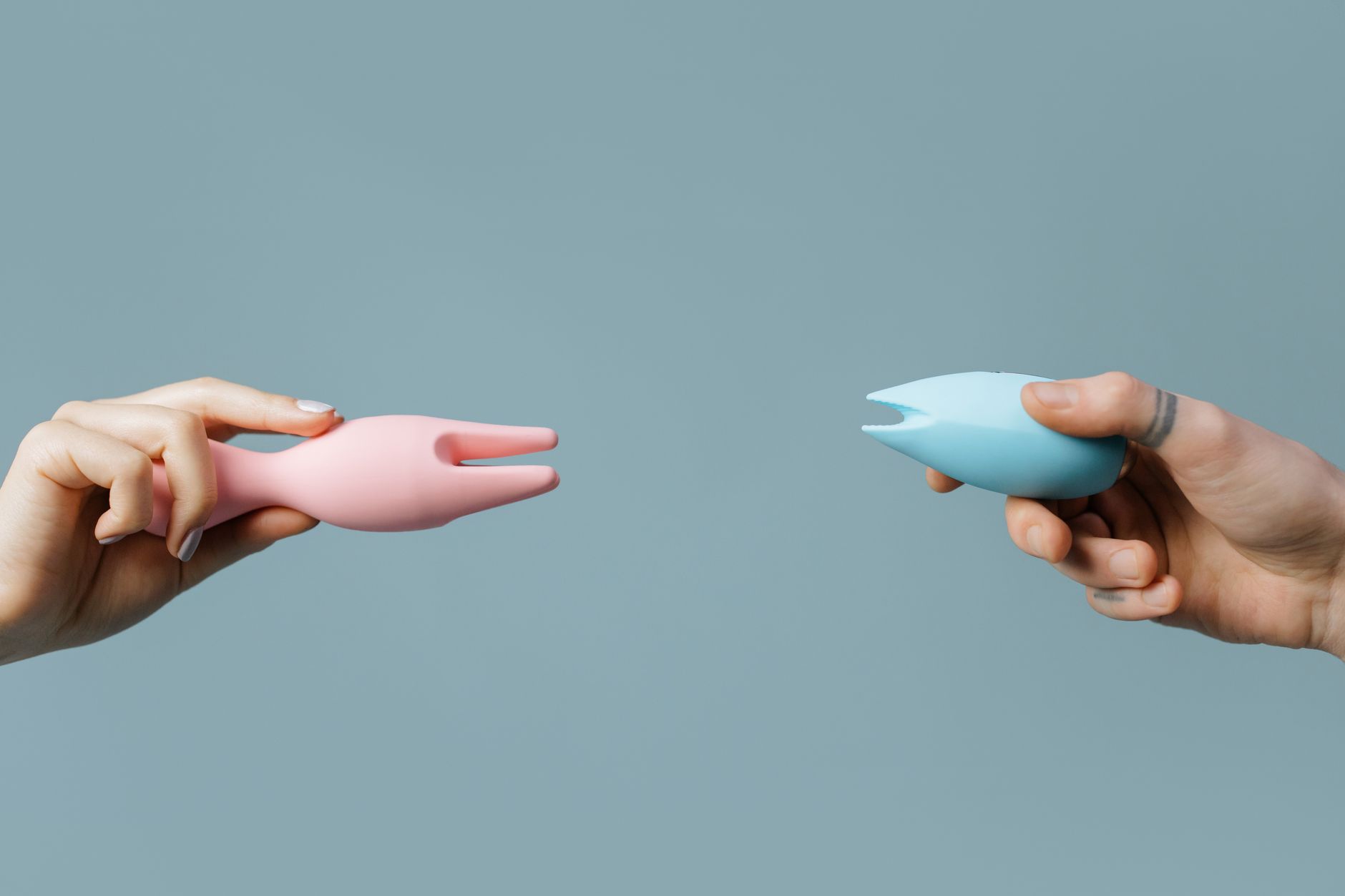
How to Use Lemon Vibrators When You Want to Rebuild Intimacy After Relationship Stress
When distance has crept in, physical reconnection is often the hardest part to start. Lemon clitoral vibrators can become a bridge between hesitation and desire.
Relationship stress doesn't just live in your head. It lives in your body too. When you've been distant from a partner—whether from conflict, work chaos, burnout, or just the slow accumulation of unspoken things—your nervous system learns to protect itself. Arousal becomes harder to access. Touch feels loaded with pressure instead of pleasure. The thought of sex can feel like another obligation instead of a reconnection.
Here's what matters: rebuilding physical intimacy after stress is not about pushing through discomfort. It's about creating safe, low-pressure pathways back to desire. And that's where lemon vibrators can actually help in ways most people don't expect.
Your partner probably suggested talking more. Maybe they suggested a date night. Both good ideas, and both incomplete. The issue is this: when your nervous system is in protective mode, rational conversation alone doesn't shift much. Your body needs permission to feel safe again before your mind can follow.
That's where individual pleasure comes in. It sounds counterintuitive, but using a lemon clitoral vibrator on your own—or with your partner present but not demanding participation—is often the fastest way to rewire your nervous system's response to intimacy. You're literally practicing pleasure in a low-stakes environment. You're reminding your body what arousal feels like without the weight of performance.
Start solo. No pressure to perform, no partner watching, no expectation of orgasm. Your job is just to remember what turn-on feels like in your own body. Set aside 15-20 minutes when you're alone and unhurried. Use a lemon vibrator on the lowest intensity setting—patterns 1 or 2 on the lem vibrator settings—and take your time. Don't aim for climax. The goal is sensation, not outcome.
Many people skip this phase because it feels selfish or unnecessary. It's neither. You're literally resetting your arousal baseline. Your nervous system needs data that pleasure is safe again. Solo exploration with a lemon clitoral vibrator gives your brain that signal in the clearest possible way.
Phase 2: Rebuilding comfort with your partner present (weeks 3-4)
Once you've had a few solo sessions, invite your partner into the room—not as a participant, just as a presence. You might be using your lemon sexual toy while they're reading nearby, or you might tell them you're taking time for yourself and they can listen to music in the same room. The point is desensitization. You're teaching your body that pleasure and your partner's presence don't have to feel contradictory.
If that feels too vulnerable, start even smaller: show your partner your lemon vibrator, explain what you're doing, and have them leave. That moment of sharing can matter more than you'd expect. Vulnerability, even small, is a form of reconnection.
Phase 3: Shared exploration with low expectations (weeks 5+)
Now the door opens for your partner to join, but on your terms. This doesn't mean they have to touch you. It means they can be involved: they might use their own toy, they might watch while you use yours, they might apply lubricant while you guide your lemon clitoral vibrator. The key is that sex is no longer the goal. Pleasure is. And you're both practicing it together without the pressure of traditional performance.
There are a few practical reasons. First, the design of lemon vibrators and the lem vibrator specifically offers gentle, broad stimulation that feels less clinical than other options. You're not pressing yourself into a shape. You're settling into something that meets you where you are.
Second, the intensity progression on a lemon clitoral vibrator is intuitive. You can start at the absolute lowest setting and gradually increase as your nervous system relaxes. That control matters when you're rebuilding trust in your own arousal. You're not at the mercy of an intense sensation. You're calling the shots.
Third, there's something about the simplicity of a lemon sexual toy that removes shame. You're not worried about technique or whether you're using it "right." It's just a tool that creates sensation. That clarity is surprisingly grounding when your relationship has been cloudy.
Before phase 2, talk to your partner. Not in a heavy, scheduled-meeting way. Just be honest: "I want to rebuild what we had physically, but I need to do it slowly. I'm going to spend some time rediscovering what feels good to me, and I want you to know that's not about you. It's about me remembering how to feel safe in my own pleasure. Once I do, I want us to explore together."
That conversation does two things. It sets a timeline so your partner knows this isn't rejection. And it frames rebuilding as collaborative, not as you retreating further. Most partners respond well to clarity. They struggle with ambiguity.
Some people ask: should we use a lemon vibrator together from the start? The answer depends on how much distance there is. If the stress was recent and surface-level, yes, you can skip straight to using it together. But if there's been months of disconnection or unresolved conflict, starting solo usually works faster.
When you do use your lemon vibrator together, take these steps. Start with conversation about what you'd like. Use water-based lubricant so the sensation is comfortable. Keep the intensity moderate—surprise yourself with what feels good rather than chasing maximum sensation. And remember: if it doesn't feel good, stop. The point is rebuilding trust in pleasure, not proving you're "fixed."
Rebuilding intimacy often stirs up old stuff: shame about wanting pleasure, guilt about needing solo time, fear that toys mean your partner isn't enough. These feelings are normal and they're not a sign you're doing something wrong.
When shame appears, pause. You don't have to push through it. Shame is just your nervous system saying "this doesn't feel safe yet." That's useful data. You might spend another week in phase 1. You might talk to your partner about what triggered the shame. You might see a therapist together. All of that is rebuilding.
The lemon clitoral vibrators are a tool, not a cure. They help create the conditions for reconnection. But the actual work—the conversations, the vulnerability, the willingness to move slowly—that's on you and your partner.
There's no standard timeline. Some couples report feeling reconnected in 4-6 weeks. Others take months. The variable isn't the tools you use. It's whether you're both willing to rebuild and whether the underlying conflict has been addressed. If you're using a lemon vibrator but still haven't talked about the thing that created distance, progress stalls. So yes, rebuild physically. But also rebuild emotionally.
Not if you frame it as expansion, not replacement. The conversation matters here: "I want to explore pleasure with tools that help me relax into sensation. This isn't about you. It's about us building something richer together." Most partners respond to specificity and honesty. Secrecy breeds resentment. Openness builds trust.
You can share, but owning individual toys often makes the experience feel less transactional. It signals that you've both invested in the rebuilding. That said, if budget is tight, sharing is fine—just make sure you're cleaning it thoroughly between uses and that you're both genuinely comfortable with it.
That's important information. Honor it. The rebuilding process only works if both people feel safe, and if your partner's touch still feels loaded with pressure, you're not ready. Use your lemon clitoral vibrator on yourself with them present. Move to them touching you when your nervous system signals readiness. That signal comes from your body, not from a timeline.
Ask yourself: Am I feeling desire? Is my partner being patient? Are we talking about what matters? If the answer to all three is yes, you're rebuilding. If you're using lemon vibrators but still avoiding conversation, still resentful, still distant, then the vibrator is a distraction. Go back to the emotional work.
Not at all. In fact, it's one of the most honest things you can do. You're acknowledging that reconnection takes intentional effort. You're choosing pleasure as a language when words have failed. That's not weird. That's wise.
Rebuilding intimacy after relationship stress is slow work, and that's by design. Your nervous system doesn't rewire overnight. But when you approach it with patience, honesty, and tools like lemon clitoral vibrators that help you practice pleasure without performance pressure, you give yourself the best chance.
Start alone. Move slowly into being together. Talk about what matters. And remember: the point isn't to get back to where you were. It's to build something stronger, something where both of you feel safe enough to want each other again.
If you're still struggling after a few months, or if the underlying conflict hasn't resolved, consider talking to a couples therapist. Sometimes rebuilding requires more than vibrators and intention. Sometimes it requires professional support. And that's okay. Asking for help is part of rebuilding too. If you'd like to discuss your relationship concerns in more depth, reach out to explore resources and support options.