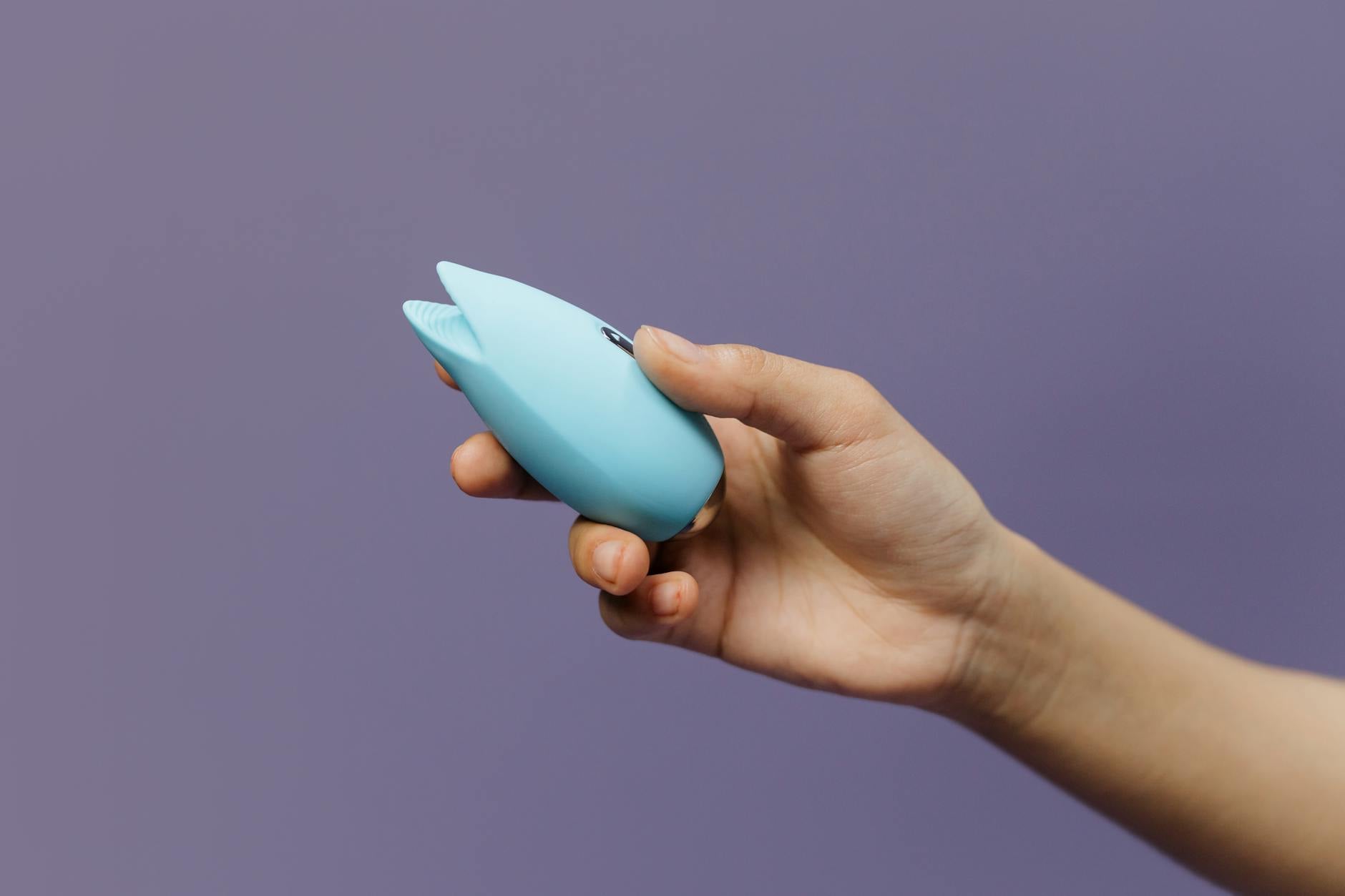
How to Use Lemon Vibrators When Your Sensitivity Changes With Age
Your clitoris doesn't work the same way at 35 as it did at 25. Here's what actually changes, why it matters, and how to use your vibrator to match your body right now.
Here's what nobody tells you: your clitoris doesn't age the way the rest of your body does. It gets smarter. The nerve density stays stable, but how those nerves respond to stimulation shifts. Sometimes it's more responsive. Sometimes it needs a completely different approach to reach that peak you've known for years.
If you've noticed that the vibration intensity or pattern that worked for you five years ago now feels either too intense or not quite enough, you're not broken. Your body is just renegotiating what pleasure looks like. And your lemon clitoral vibrator can absolutely adapt with you.
The clitoris contains roughly 8,000 nerve endings, and those don't disappear. What changes is the tissue around them. Over time, skin becomes slightly less elastic. Pelvic floor muscle tone naturally decreases unless you're actively maintaining it. Hormonal shifts (even subtle ones unrelated to menopause) can affect how quickly blood flows to the area. And psychologically, you're carrying more life experience—stress, relationship shifts, body image changes—all of which live in your nervous system.
The result? Some people report heightened sensitivity in their 30s and 40s. Others find they need more sustained stimulation, or gentler patterns that build slowly. A few notice that direct pressure feels overwhelming where it never did before. These aren't failures. They're recalibrations.
Your sensitivity shift could show up as any of these patterns:
You need gentler pressure now. The intensity you loved at 25 feels sharp or uncomfortable. You find yourself wanting patterns like the Lem's lower settings, which distribute stimulation more diffusely rather than concentrating it on one spot.
You need stronger, more sustained pressure. Conversely, light touch that used to build arousal now feels like it's going nowhere. You need a pattern that holds steady and doesn't back off.
The warm-up takes longer. You notice that you're not getting aroused from the first touch anymore. You need 10-15 minutes of gentle stimulation before intensity feels good, whereas it used to work in 2-3 minutes.
Your body responds differently to patterns than steady vibration. Rhythmic pulses that used to feel chaotic now feel exactly right. Or the opposite—you need consistent, steady vibration instead of patterns.
You're sensitive to where and how you're touching. Maybe indirect stimulation (against the hood, on the sides) now feels better than direct contact. Or you need a warm hand or body nearby at the same time.
None of these are permanent. They're invitations to pay attention to what your body actually wants rather than what it used to want.
Your Nancy Lemon clitoral vibrator has flexibility built into it. You're not locked into one way of using it. Here's how to work with your changing sensitivity:
Start with the lowest settings and work upward, not downward. Most people have a habitual intensity they reach for without thinking. If you've been jumping straight to pattern level 4, try starting at level 1 for an entire session and notice what happens. Patience isn't boring. It's information gathering. You might find that patterns 1-3 now offer the range you need, and patterns 4-5 are reserved for when you want something sharper or more intense. Or you might discover that level 1 alone can build you to orgasm—it just takes longer, and that longer journey feels better now.
Experiment with indirect stimulation. Instead of pressing your lemon vibrator directly against your clitoris, try placing it against the area just above or to the side of it. Move it slowly, letting the vibration waves reach the sensitive tissue indirectly. For many people, this gentler pressure feels incredible as sensitivity patterns shift. It's also easier on tissue that has become more easily irritated.
Vary your pattern within a single session. You don't have to commit to one pattern for the whole experience. Try: start with pattern 1 for 3-5 minutes, move to pattern 2 for another 3-5, then pulse between patterns 2 and 3 as you get closer to orgasm. Mixing patterns is especially helpful if your sensitivity feels unpredictable right now.
Add external input. Touch yourself (without the vibrator) while using it. Breathe in a different rhythm than the vibrator's pulse. Have your partner touch another part of your body simultaneously. Sometimes what changes isn't your clitoris's sensitivity so much as your brain's capacity to focus—adding multiple inputs can actually help recalibrate what feels good.
Build in longer warm-up time.When arousal takes longer than it used to, your lemon vibrator shines because it's designed for sustained, sustainable pleasure. Don't fight the longer timeline. Use it. Spend 15-20 minutes letting sensation build instead of trying to rush to intensity.
If you're noticing reduced sensitivity or slower arousal, your pelvic floor might be holding more tension than it used to. As we age, these muscles naturally tighten from stress, childbirth, or simply less regular practice of relaxation.
Before you use your vibrator, try this: lie down and spend 2-3 minutes breathing while actively releasing your pelvic floor (imagine the muscles softening and spreading rather than gripping). Then start with your vibrator at a low intensity. You might find that the combination—a truly relaxed pelvic floor plus gentle sustained vibration—wakes up sensitivity you thought you'd lost.
Kegel exercises strengthen the pelvic floor, which is useful. But the opposite move—consciously relaxing these muscles—is equally important as you age and as sensitivity changes.
If your sensitivity has changed suddenly and dramatically, or if stimulation that used to feel good now causes pain, talk to a doctor. Infections, skin conditions, nerve issues, and certain medications can all shift sensitivity. That's different from the gradual recalibration that comes with aging, and it deserves a professional's attention.
If you're using hormonal birth control and noticing numbness or reduced sensation, your clitoris may be responding to hormonal shifts. That's also worth flagging with your doctor or a provider who knows your history.
For regular sensitivity changes that don't involve pain? Your lemon vibrator, combined with patience and experimentation, is often the best recalibration tool you have.
Most conversations about aging and sexuality center on loss. You lose hormones, you lose elasticity, you lose responsiveness. That framing isn't wrong, exactly, but it's incomplete.
What I've seen in my work with couples and individuals is that sensitivity changes often come with a knowledge upgrade. You know your body better. You know what you want. You're less willing to perform pleasure you don't actually feel. You're more likely to speak up if something isn't working. Your lemon clitoral vibrator isn't just a tool—it's an extension of that clearer self-knowledge.
Use it to learn, not to force your body back into an older version of itself. The sensitivity you have now might be different from what you had at 25, but different doesn't mean worse. It often means more honest.
Not permanently. Sensitivity can fluctuate with hormones, stress, medications, and relationship dynamics. Even if direct clitoral stimulation feels less responsive right now, gentler stimulation patterns or indirect approaches often unlock sensation you thought was gone. Try adjusting your approach with your lemon vibrator before assuming anything is permanent.
There's no magic number. Some people notice changes in their early 30s, others in their 50s, and some never notice significant shifts at all. The variables include genetics, hormonal history, pelvic floor health, stress levels, and overall physical fitness. The changes aren't inevitable—they're common, but not universal.
No. Regular, varied use actually maintains sensitivity. What can create temporary numbness is using the same intensity and pattern obsessively without variety. If you're using your vibrator in the same way every single day, your nervous system adapts and stops responding as strongly. Switch it up—change patterns, change intensity, change frequency, add manual touch. Variety keeps sensation fresh.
Completely normal. Some people's nervous systems become more responsive with age, especially if pelvic floor strength improves or if they've processed past sexual shame. If you find that you're becoming sensitive to vibration where you weren't before, start at lower intensity settings and work up. Your lemon vibrator's range supports both directions of change.
Not necessarily. Your lemon clitoral vibrator has a wide range of patterns and intensities. Most sensitivity shifts can be met by changing how you use what you already have. That said, if you've had the same vibrator for 5-10 years and it's showing wear, a fresh one will feel noticeably different. But the Lem's design works well across sensitivity ranges, so switching patterns is usually enough.
Your body is still learning. Every time your sensitivity shifts, it's not a loss. It's your nervous system offering you new information about what feels good. Your lemon clitoral vibrator can dance with you through every version of that conversation.