
When grief makes pleasure feel impossible
Here's what I see in my practice: people assume that grief and pleasure are opposites. That if you're sad, you shouldn't be having orgasms. That wanting to feel good in your body during a hard time is somehow disloyal to the loss you're grieving. It's not.
What grief actually does is flatten the nervous system. It narrows your band of accessible sensation. You might feel numb, or hypersensitive to touch, or swinging between the two. Your brain is in protection mode. Pleasure feels either impossible or vaguely wrong.
Lemon vibrators, particularly suction-based designs like the ones Hello Nancy makes, can be a gentle entry point back into sensation when everything else feels too loud.
Why grief kills arousal
When you're grieving, your body isn't being difficult. It's doing exactly what it's supposed to do. Grief activates your parasympathetic nervous system in shutdown mode. That's not sadness. That's literal neurobiology turning down the dial on sensation, arousal, and even basic comfort.
At the same time, cortisol and adrenaline spike, which can create a weird paradox: you're exhausted but also wired. You might want to feel something, anything, but your body won't cooperate. Or you might have moments where desire flickers back, and then guilt crashes in because you feel like you shouldn't be thinking about pleasure right now.
You should be. Pleasure is information. It tells your nervous system that safety exists. That there's still goodness in your body. That you're not broken.
Why lemon vibrators work differently for grieving bodies
Traditional vibrators rely on your body meeting them halfway. They need arousal to build, sensitivity to be present, mental focus. Grief strips all three.
Lemon clitoral vibrators use suction technology, not percussion. That matters because suction works on a different neural pathway. It doesn't require your arousal to be primed. It doesn't demand sensitivity. It just wakes up the nerves through gentle, consistent stimulation.
I've had clients tell me that the first time they felt anything after a major loss was using a lemon sucker vibrator. Not because they suddenly wanted sex. But because their body remembered that pleasure was a possibility. That sensation could feel like relief instead of nothing.
Starting small when you're overwhelmed
If you're in acute grief, here's the permission you need: you don't have to orgasm. That's not the goal. The goal is remembering that your body can feel something other than numbness or pain.
Start with the lowest setting. Most lemon vibrators have 3-4 intensity levels. Spend time on level 1. Not moving toward an orgasm. Just noticing what sensation feels like. Close your eyes. Breathe. Treat it like a meditation, not a destination.
Five minutes is enough. You don't need thirty. You're not trying to prove anything or achieve anything. You're literally just reminding your nervous system that pleasure exists.
Do this in a safe, private space where you won't be interrupted. Grief needs permission to be present too. If tears come during this, that's normal. Your body is processing something. Let it.
Grief and desire with a partner
If you have a partner, this is a conversation you need to have separate from intimacy itself. Something like: "I'm struggling right now, and I want to reconnect with my body in small ways. That might look like using a vibrator alone. That might eventually include you. But I need to know it's okay if I'm not ready for sex yet."
Most partners want permission to show up, not rejection. Knowing that you want to reclaim sensation is different from being pushed away. It's actually often healing for them too.
When you do bring a lemon vibrator into partnered time, start by using it alone while they're present. They're not doing anything. They're just there. This dissolves the pressure of performance and lets both of you remember that intimacy isn't always about intercourse. Sometimes it's about being close while one person reclaims their body.
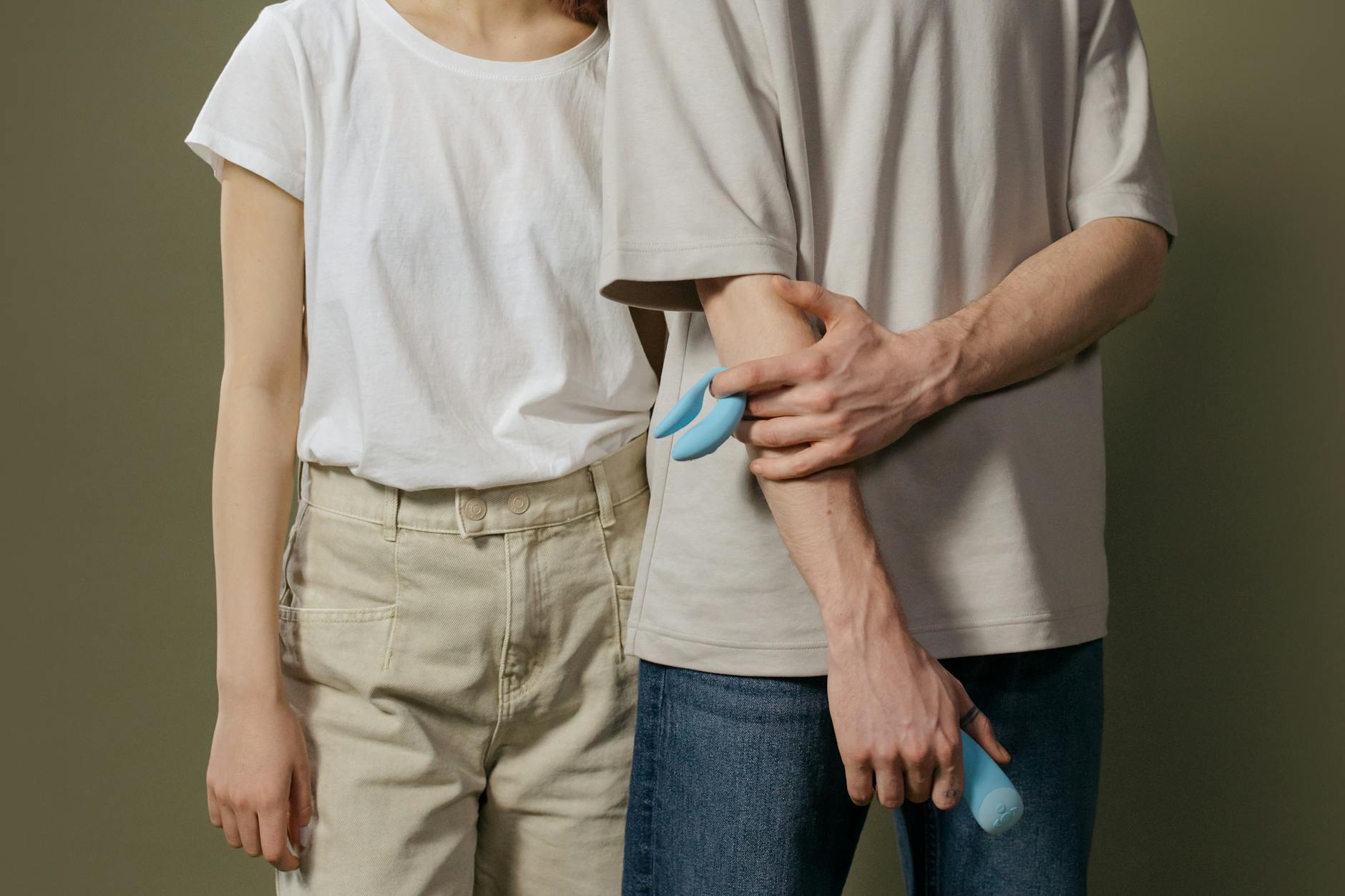
Photo by cottonbro studio on Pexels
Grief and self-compassion
One of the biggest barriers I see is the story people tell themselves: "I shouldn't want this right now." That's the culture talking. Not your body. Not actually helpful.
Your body wants to survive. It wants to know that aliveness is still possible. Using a lemon vibrator during grief isn't selfish or disloyal. It's actually an act of self-preservation. It's you saying: I'm still here. My nervous system still works. I'm not gone.
That's radical in grief. Because grief wants you to believe that everything is permanently broken. Your body knows better.
If guilt comes up, sit with it for a moment. Ask yourself: am I grieving a person, or am I actually punishing myself? Because those feel similar but they're not the same. One is necessary. The other is a trap.
When numbness isn't lifting
If you've been using a lemon vibrator for two weeks and feel absolutely nothing, including no pleasure and no sensation, that might be a sign that the grief is deeper than pleasure can reach right now. That's not a failure. That's information.
Talk to a therapist. Grief that creates complete numbness for weeks at a time can be depression, and that's treatable. A therapist who specializes in grief can help you understand whether you're in normal grief or whether you need additional support.
Pleasure devices are tools. They're not substitutes for processing loss with a professional.
Rebuilding arousal after the acute phase
After the first weeks or months, when the numbness starts to lighten slightly, you might notice that arousal feels different. Slower to arrive. Less intense. That's normal.
This is when understanding your pleasure cycle becomes useful. If you've been using a lemon vibrator during the numb phase, you already have a relationship with it. You can start experimenting with longer sessions. Different times of day. Maybe even partnered use if that feels right.
Some people find that arousal actually returns stronger after grief, once they're on the other side. The pressure lifts. The nervous system remembers what safety feels like. And suddenly, wanting something for yourself doesn't feel selfish anymore. It feels necessary.
Lemon adult toys, particularly clitoral vibrators designed with suction technology, become less about chasing sensation and more about celebrating that you're still here.
The long view
Grief isn't linear. You might have a week where pleasure feels accessible, then a week where it disappears again. That's grief working, not pleasure failing.
Keep the lemon vibrator nearby. Not as a pressure to perform, but as a tool that's available when your body is ready. Sometimes that's weekly. Sometimes it's months between uses. Both are fine.
What matters is knowing that your capacity for pleasure hasn't gone anywhere. It's just been turned down while your nervous system processed something hard. And when you're ready, it's still there.
Your body survived this. Your desire will too. You might find it's a little different on the other side. Deeper, maybe. More intentional. That's okay. Grief changes us. Pleasure changes us too. And together, they're how we know we're still alive.
Frequently asked questions
Can I use a lemon vibrator if I'm on antidepressants while grieving?
Yes. Many people on SSRIs experience changes in sensation and arousal, and grief can intensify that. A lemon clitoral vibrator might actually be more effective than before because it doesn't rely on natural arousal building. That said, talk to your doctor or therapist about whether the numbness you're experiencing is grief, medication side effects, or both. Understanding the source helps you know what tool to reach for. If you want more specific guidance, explore how to use lemon vibrators for better orgasms when you're on antidepressants.
What if my partner wants intimacy but I'm not ready?
This needs to be a conversation, not something that happens during a moment of physical closeness. Tell your partner: "I'm grieving, and my body doesn't feel ready for sex right now. That doesn't mean I don't love you. I'm using a vibrator to reconnect with my own pleasure, and that might eventually include you. But I need time." Most partners respond well to honesty and timeline, even if the timeline is "I don't know yet." If this is a recurring tension in your relationship, how to use lemon vibrators for better pleasure in long-term relationships might offer useful framing.
Is it normal to cry while using a vibrator during grief?
Completely normal. You're in your body, your nervous system is waking up, and emotions are stored in the nervous system. Crying is release. It's actually a sign that the vibrator is working, not a sign that something's wrong. Let it happen. Keep tissues nearby. Afterward, be gentle with yourself. You just did something brave.
How long does it take to feel pleasure again after a major loss?
There's no timeline. For some people, it's weeks. For others, months. Some people experience waves of it returning, then receding. The important thing isn't how fast pleasure returns. It's that you're giving your body permission to reconnect with sensation at whatever pace feels safe. If arousal hasn't budged in three months and you feel otherwise functional, that's probably normal grief. If it's accompanied by total numbness, loss of appetite, or inability to get out of bed, talk to a professional.
Can lemon vibrators help with complicated grief?
Complicated grief is when grief gets stuck, and pleasure devices can't untangle that alone. A therapist is essential. That said, a lemon sucker vibrator can be part of a broader toolkit for reconnecting to your body while you're doing the deeper work. Think of it as permission to be a living, feeling person while you grieve. It's not a substitute for professional support, but it's a useful companion to it.
What if I feel guilty for wanting pleasure while grieving?
That guilt is coming from culture, not from anything true about you. Grief doesn't erase your right to pleasure. Pleasure doesn't erase your grief. Both can exist. In fact, one of the most healing things you can do is prove to your nervous system that aliveness and sadness can coexist. Using a lemon vibrator while grieving is actually an act of radical self-love. You're saying: I'm sad and I'm also allowed to feel good. That's the truth.